
Coffee Revolution: How Specialty Coffee Culture in Kazakhstan Became a New Art of Living
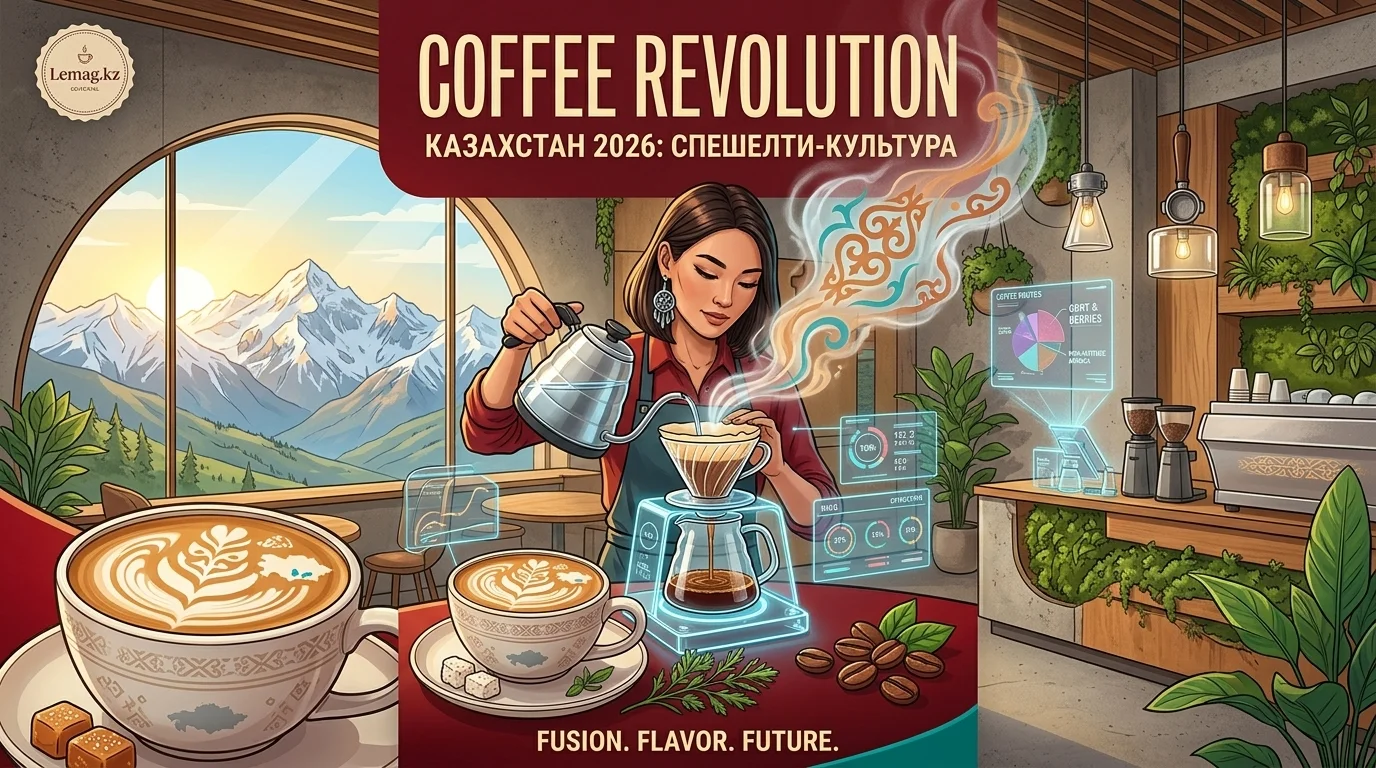
Just a few years ago, coffee was simply a way for most city dwellers to wake up before work. In 2026, everything changed dramatically: the coffee cup became an object of aesthetic pleasure, a social element, and a collector's item for rare flavor profiles.
Specialty coffee culture in Almaty, Astana, and Shymkent is experiencing a real boom, combining cutting-edge roasting technologies, culinary experiments, and a warm local flavor. Lemag.kz embarks on a fascinating guide to the top coffee trends of 2026!
1. From Bean to Cup: The Specialty Philosophy in 2026
What makes a coffee shop more than just a point of sale, but a place of attraction? In 2026, the key factors are traceability and super-customization. Direct Import (Direct Trade):**Kazakhstani roasters work directly with farmers in Ethiopia, Colombia, and Kenya. Now, the menu displays not just the country, but the name of the specific micro-farm, the altitude, and the processing method (anaerobic fermentation or fruit-based fermentation).
Smart Brewing:The use of automated drip stations and coffee machines with precise control of temperature, pressure, and water mineralization allows for the most subtle notes to be revealed—from ripe papaya to white tea.
Alternative Milk 2.0:Oat and almond milks have become classics. Pine nut milk, sesame milk, and specially developed plant-based formulas that don't overpower the espresso flavor are trending.
2. Local Accent: Coffee Drinks with a Kazakh Soul
The main hit of 2026 was signature drinks, in which world coffee classics are intertwined with traditional Kazakhstani ingredients and flavors. 
Lemag.kz Editor's Choice:Be sure to try the "Zhetysu Filter"—a classic specialty filter infused with mountain herbs and berry cordial. It's the perfect symbiosis of freshness and a full-bodied coffee!
3. Coworking Aesthetics Trend: Coffee Shop as Third Place
The concept of a "third place" (between home and work) has firmly established itself in specialty coffee shops. In 2026, spaces are being designed to meet the needs of a wide variety of guests:
Quiet Operation Zones:Desks with wireless charging stations, acoustic partitions, and ergonomic furniture for freelancers and nomads.
Dog-Friendly and Eco-Friendly culture:Not only are establishments pet-friendly, but they also completely ban single-use plastic, offering bonuses for using their thermal mugs.
Micro-galleries:The walls of coffee shops are increasingly becoming exhibitions for young Kazakhstani artists and photographers.
4. How to Properly Tasting Coffee: 3 Steps from a Barista
To learn to distinguish flavor nuances like a real cupper (professional taster):
Rate the aroma:Take a deep breath immediately after your drink is served (the most volatile compounds are hidden in the aroma).
Take your first breath of air:“Sucking” the coffee in with air allows the drink to be distributed across all the taste buds of the tongue.
Pay attention to the aftertaste:High-quality specialty coffee leaves a pleasant sweetness and a long berry or nutty aftertaste even after 10–15 minutes.
❓ FAQ
What is Specialty Coffee?
This is a premium Arabica coffee (80+ SCA points), grown in unique climate conditions, carefully selected and roasted to reveal its natural flavor profile.
How is filter coffee different from regular Americano?
Americano is made by diluting espresso with water, while filter coffee is brewed by pouring hot water over ground coffee in a paper filter, resulting in a cleaner, more complex, and richer flavor.
What coffee trends will be popular in Kazakhstan in 2026?
The main trends are signature drinks with national ingredients (irimshik, salted kurt, mountain herbs), new-generation plant-based milk, and eco-friendly coffee shop design.
Is it okay to drink specialty coffee every day?
Yes, thanks to the high degree of bean cleaning, moderate roasting, and absence of defects, this coffee is easier to digest and provides maximum taste pleasure when consumed in moderation.
How to choose quality grain for your home?
Look for the roasting date (ideally 7 to 30 days after roasting), farm/region information, and flavor descriptors on the packaging.
📚 Read also

Biohacking 2026: Body Upgrade Based on Science – What Works and What's Just Marketing
Biohacking isn't about "hacking your body" with pills, as advertised, but rather an engineering approach to the body: measure, change one variable, and look at the data. We'll explore which tools of 2026 will truly provide energy and clarity, and which are just pretty placebos.
Effective Time Management: How to Get Things Done When Everything Important Was Yesterday
The problem isn't the number of hours—everyone has 24. The problem is that time is spent on other people's priorities. A practical guide to time management 2026: from an audit of "where your day goes" to a time-block system and a weekly overview that holds it all together.
Digital Detox: How to Regain Your Focus and Energy When the Screen Is Closer Than Family
A digital detox isn't about giving up technology, but about reclaiming your power to choose where to look and when to respond. A practical guide with an attention audit, three detox levels, and a 7-day reboot protocol for those who live in notifications.
💬 Comments (0)
No comments yet. Be the first!
Leave a comment
Comments are pre-moderated.