
Corporate Athlete: How Physical Activity Keeps You Competitive in an Age of Overwork

The modern corporation demands a paradoxical outcome: marathon-like endurance despite a sedentary lifestyle. Twelve-hour days in a chair, phone calls instead of walks, deadlines instead of sleep—the body wasn't designed for this kind of regimen. The good news: this biological conflict isn't resolved by "exercising to the point of exhaustion on weekends," but by a system of moderate exercise that can be realistically integrated into a work schedule. The team atLemag.kzhas compiled an evidence base and a practical program for those who want to keep their brains sharp and their bodies productive. ## 1. A Sedentary Day: What Happens to the Body by 6:00 PM
After 6-8 hours in a chair, blood flow in the legs slows down, the deep muscles of the back “fall asleep,” and the sensitivity of cells to insulin drops after just one long period of sitting. Subjectively, this is felt as fatigue, fog in the head, and a desire for sweets - the brain requires glucose because the muscles have stopped taking it.
- Neck and lower back:statics overload the fascia - hence the evening pain;
- Heart:without regular pulse peaks, stroke volume decreases—shortness of breath occurs earlier;
- Brain:less blood flow means less oxygen, slower decision making.
Feeling tired after sitting all day is not a sign of hard work, but rather a sign that your body has been sitting in the wrong position all day.
2. The brain is also a muscle: biochemistry of movement
Physical activity is the most legal and cheapest “nootropic.” During and after training, the brain receives a cocktail that no energy drink can provide:
- BDNF— a protein “fertilizer” for neurons: improves memory and learning speed;
- Dopamine and norepinephrine— focus and motivation for 2–4 hours after exercise;
- Reducing cortisol— an evening workout “burns off” the stress accumulated during phone calls;
- Deep sleep- after exercise, the body increases the proportion of deep stages in which the brain repairs itself.
That is why after the meeting, complex letters are easier to write, and conflict negotiations are perceived more calmly.
3. “Corporate athlete”: why HR talks about this
The term has taken hold in the Westcorporate athlete— an employee who manages their energy like an athlete: workload → recovery → peak performance. Companies integrate this into their culture: walking meetings, flexible training slots, corporate step challenges. The reason is simple: a burned-out employee costs the company more than a gym membership.

4. Minimum effective dose: 150 minutes
WHO gives a simple formula:150 minutes of moderateor75 minutes of intenseactivity per week + 2 strength training. Translated into the language of a busy person:
- 3 × 40 minutes per week (gym, running, pool, bicycle);
- plus everyday activity: 8–10 thousand steps, stairs instead of an elevator;
- plus 2 short strength exercises - you can do them at home with dumbbells.
This is not “high performance sport”, it is hygiene, like brushing your teeth.
5. Exercise Snacks: Micro-Workouts Between Meetings
If the day is scheduled with slots, there are “breaks” of 3–5 minutes:
- 20 squats after an hour-long phone call;
- 60 second plank before difficult writing;
- 2 flights of stairs instead of an elevator;
- stretching the chest and neck at the doorway.
Research on exercise snacks shows that three of these snacks a day improves insulin sensitivity and reduces the afternoon energy slump—the one that makes you reach for that third coffee at 3 p.m.
Transform screen-free status calls into walks: 30 minutes of walking = a closed meeting + 3,000 steps + reduced tension in negotiations. This is the best corporate habit to develop during the warm season. :::
Transform screen-free status calls into walks: 30 minutes of walking = a closed meeting + 3,000 steps + reduced tension in negotiations. This is the best corporate habit to develop during the warm season.
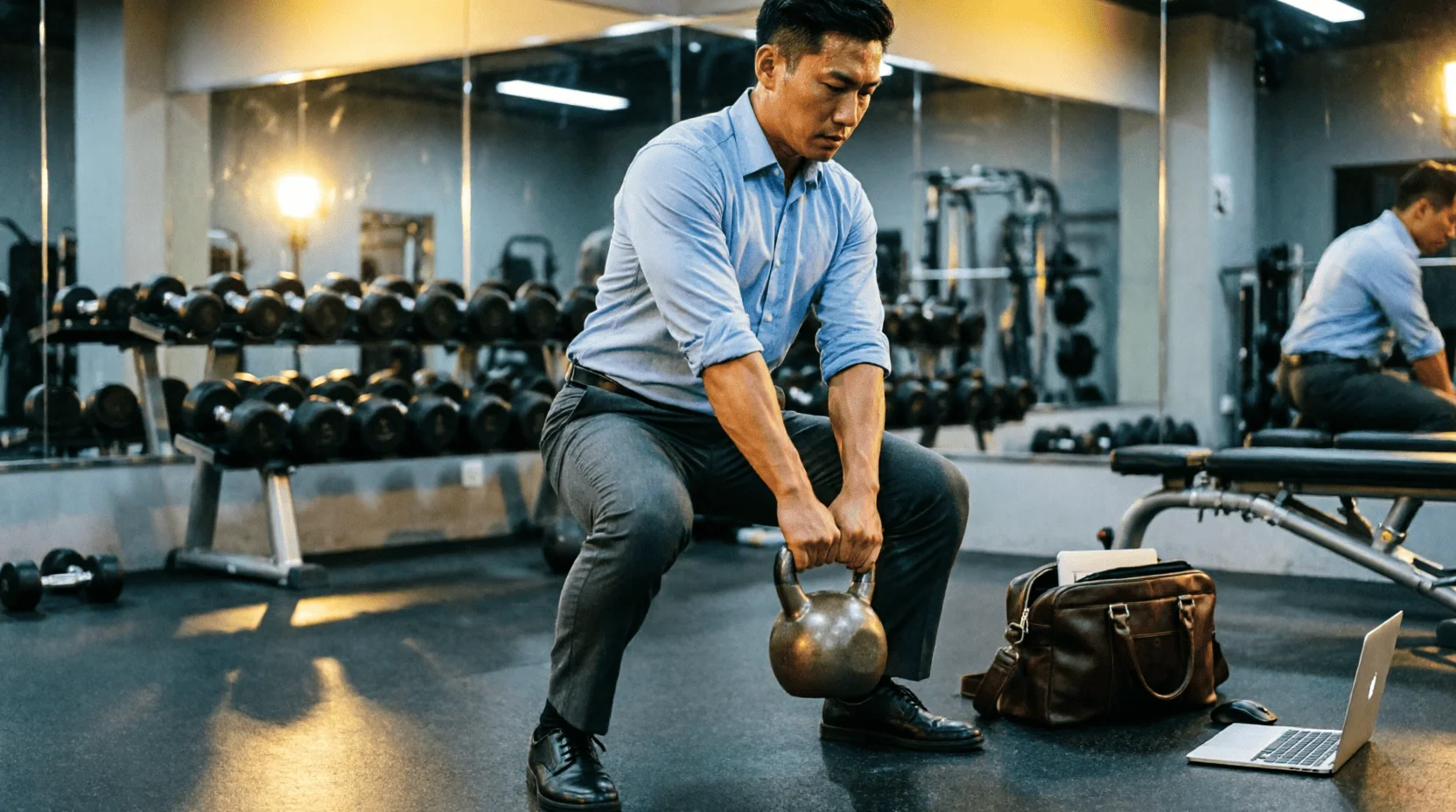 ## 6. Strength - The Body's Retirement Account
After age 30, a person loses 3-5% of muscle mass per decade without exercise (sarcopenia). Muscles are the main consumer of glucose and the holder of posture; they decide whether you will be able to withstand business trips and overtime at 50 or not.
- 2 strength training sessions per week for 30–40 minutes is enough for maintenance and growth;
- base: squat, deadlift, bench press, plank - 4 movements cover 80% of the effect;
- dumbbells at home or in the gym - it doesn’t matter: the important thing is the progression of the weight.
7. Cardio and VO2max: A Metric for Your Working Endurance
VO2max — максимальное потребление кислорода — лучшая одиночная метрика «рабочей ёмкости» организма: каждый +1 мл/кг/мин даёт прибавку к энергии и снижает риски. Растёт от интервалов: 4 × 4 минуты быстрого бега/велосипеда с отдыхом, раз в неделю.
| Нагрузка | Что даёт для работы | Время в неделю |
|---|---|---|
| Ходьба 8–10k шагов | базовый кровоток, стресс-сброс | 7 × 60 мин |
| Умеренное кардио | выносливость, сон | 2 × 40 мин |
| Интервалы (VO2max) | пиковая энергия, сердце | 1 × 30 мин |
| Силовые | метаболизм, осанка | 2 × 35 мин |
| Микро-снеки | фокус между встречами | 3 × 5 мин/день |
8. Сон: без восстановления нагрузка — стресс
Training is stress; we grow in our sleep. Chronic lack of sleep (<7 hours) increases cortisol, ruins recovery and nullifies the benefits of the gym. Rules of the corporate athlete:
- Going to bed at the same time even on a deadline - stability is more important than an hour of sleep “for future use”;
- Screens - an hour before bed: blue light shifts melatonin;
- Intensive training - no later than 3 hours before bedtime;
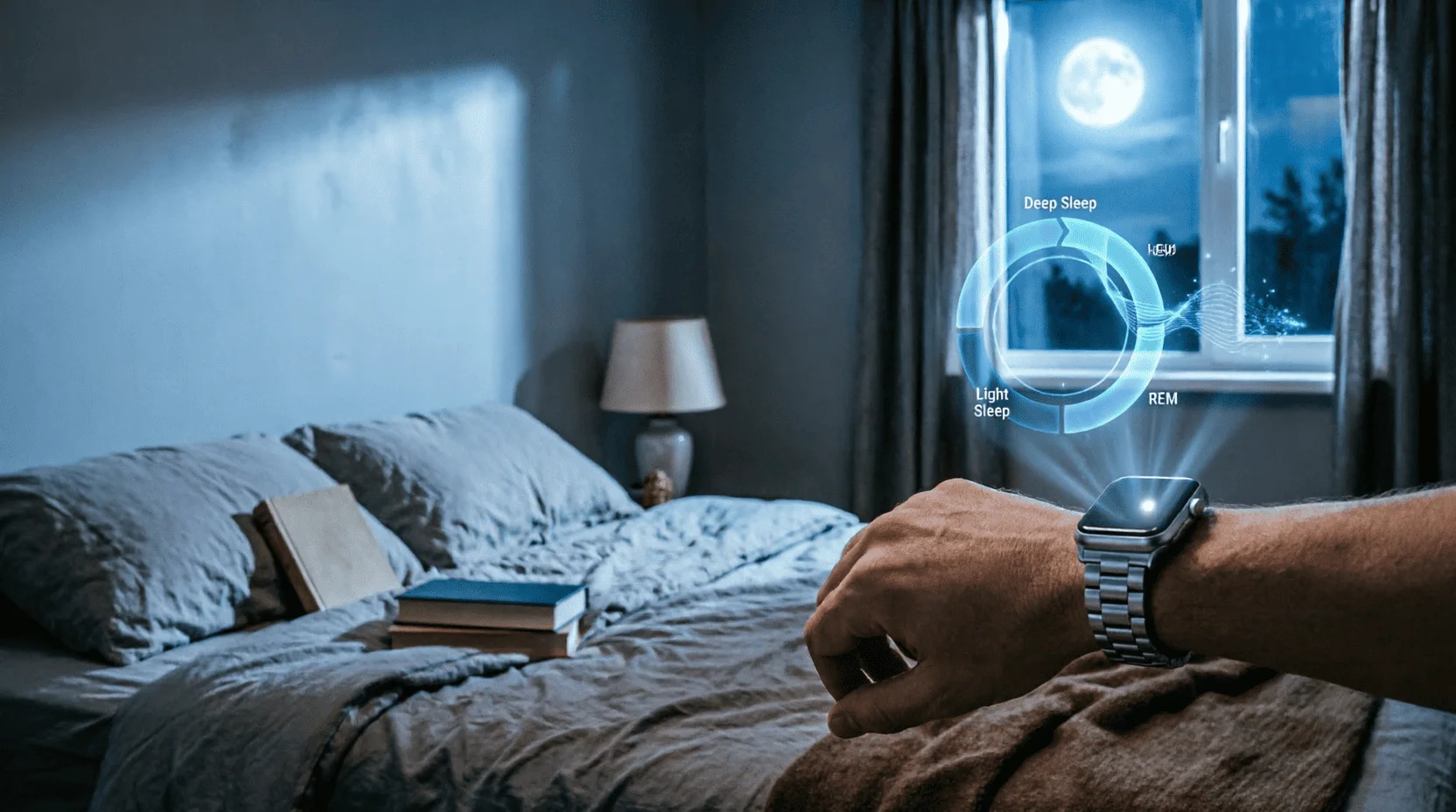
- A sleep tracker is not a gadget addiction, but a dashboard: look at deep stages and HRV.
Red Flag Warning
Your resting heart rate has increased by 5-7 beats and lasts for several days, your sleep is restless, you are irritable - your body is screaming about overtraining due to stress. Reduce your intensity by half, add walking and sleep: your productivity will return faster than after any energy drink. :::
9. Weekly program for a busy person (4 workouts + background)
- Mon, 19:00 – strength A: squat, bench press, plank (35 min).
- Tue – 10,000 steps + 3 office snack exercises.
- Wed 7:00am – 4x4 intervals (30 min) or brisk walking uphill.
- Thu – steps + stretching 10 min in the evening.
- Fri, 19:00 – strength B: deadlift, standing press, lunges (35 min).
- Sat – active recreation: walk/bike 60–90 min with family.
- Sun – complete rest, planning the week, early bedtime.
:::
- Mon, 19:00 – strength A: squat, bench press, plank (35 min).
- Tue – 10,000 steps + 3 office snack exercises.
- Wed 7:00am – 4x4 intervals (30 min) or brisk walking uphill.
- Thu – steps + stretching 10 min in the evening.
- Fri, 19:00 – strength B: deadlift, standing press, lunges (35 min).
- Sat – active recreation: walk/bike 60–90 min with family.
- Sun – complete rest, planning the week, early bedtime.
Total: 4 workouts of 30-40 minutes = 2.5 hours per week - less than one TV series. Return: +2 hours of pure energy daily.
10. Nutrition on deadline: fuel for the brain
- Breakfast with protein(30 g) - stable sugar until lunch, without “swings”;
- Water instead of a third coffee:after 2:00 pm, caffeine lasts 6–8 hours and steals deep sleep;
- Omega-3 and nuts:neuron membranes are literally built from fats;
- Half-plate rule:vegetables in half - fiber smooths out glucose peaks, and therefore mood swings at meetings.
11. Metrics: How to understand that the system is working
Keep an eye on three numbers that don't require a lab:
- Resting pulse in the morning:decreases by 5–10 beats over 8 weeks - the heart has become more efficient;
- HRV (variability):increases – recovery is normal, intensity can be increased;
- Subjective energy at 16:00:rating 1–10 in notes – in a month you will see the trend.
12. The Employer's Role: Wellness That Pays Off
Corporate wellness is still a novelty in Kazakhstan, but the first companies are already introducing flexible workout hours, step challenges between departments, and membership reimbursement. The math is simple: a day of illness or burnout costs more than a month of gym reimbursement. If your employer doesn't offer this, suggest it yourself: a pilot program for one department with energy and sick leave metrics every quarter.
Bottom line:In a modern corporation, the winner isn't the one who sits more, but the one who recovers better and maintains focus longer. Physical activity isn't a post-work hobby, but a part of self-improvement: 2.5 hours a week pays off with double the energy, calm conversations, and a clear head at 6:00 PM. Start on Monday with the program above—in 8 weeks, your body will become your competitive advantage.
❓ FAQ
How much movement is the minimum required to feel the effect at work?
The WHO recommends 150 minutes of moderate exercise per week. For an office worker, the minimum is three 30-40-minute sessions plus 8,000-10,000 steps daily. The energy boost is noticeable within 2-3 weeks.
Is it possible to replace sports with walking?
For a basic workout, yes: brisk walking lowers cortisol and trains the heart. But for metabolism and posture, 1-2 strength training sessions per week are necessary: muscles are the main consumer of glucose and the body's "retirement account."
What to do if you're on calls all day?
Use "exercise snacks": 3-5 minutes of exercise between meetings—squats, planks, stairs. Research shows that these breaks lower blood sugar and restore focus.
When will there be energy for work?
The first 7-10 days - improved sleep, by the 3-4th week - stable daytime energy and less irritability, by the 8th week - a noticeable increase in endurance on long workdays.
Train in the morning or in the evening?
When you can fit it into your schedule without sacrificing sleep. Mornings provide a stable routine, while evenings relieve work stress. The key is consistency, not time of day.
Will exercise help with burnout?
In the early stages, yes: moderate cardio and sleep restore the dopamine system. In severe burnout, intense exercise increases fatigue—start with walking and consult a specialist.
📚 Read also
Инновации в медицине: действительно ли мы нашли «лекарство от рака»?
Существует ли универсальная таблетка от рака? Вместо поисков «волшебной пилюли» наука совершила революцию в персонализированном лечении. Узнайте, как иммунотерапия, таргетные препараты, мРНК-вакцины и жидкая биопсия уже сегодня превращают смертельный приговор в излечимую или управляемую хроническую болезнь, спасая миллионы жизней.

Biohacking for Beginners in Kazakhstan 2026: How to Hack Your Body to Live Longer, Sleep Better, and Have More Energy - Gadgets, Supplements, and Protocols with Prices in Tenge
Biohacking is not about million-dollar investments in stem cells, but about a systematic approach to sleep, nutrition, and movement. The Lemag.kz team has compiled a practical guide to optimizing the body in the realities of Kazakhstan: which gadgets really work, which supplements to buy in local pharmacies, how to adapt intermittent fasting, and how to start 'hacking' your body with a budget from 0 to 50,000 tenge per month.

Дети на заказ: Как редактирование ДНК стирает грань между медициной и евгеникой
Мечта о «идеальном ребенке» перестала быть фантастикой. Технология CRISPR позволяет редактировать ДНК эмбрионов, но готова ли человечество к эре «детей на заказ»? Разбираем научные факты, этические бездны и реальные исследования генной инженерии.
💬 Comments (0)
No comments yet. Be the first!
Leave a comment
Comments are pre-moderated.