
Artificial Intelligence, Kazakhstani Style: How Our Country Became a Leader in Central Asia and Entered the World's Top 30

Where we are today: numbers that speak for themselves
Just five years ago, artificial intelligence in Kazakhstan was considered a distant prospect. Today, the picture is completely different. We've entered the top 30 countries globally in AI adoption, surpassing countries such as Russia, Turkey, and Malaysia. According to the Oxford Insights Government AI Readiness Index 2025, Kazakhstan ranks 60th globally with a score of 55.86—leading the way in Central Asia, decades ahead of all its neighbors. Kazakhstan's e-government ranks 24th out of 193 countries worldwide. Venture capital investment in AI startups reached $75 million in 2025 alone—five times more than in 2023. The country's IT services exports exceeded $1.1 billion, and 94% of all government services can be accessed online, from the comfort of home. These figures are not marketing promises, but the tangible results of systematic and consistent work.
The CIS's First AI Law: We're Even Ahead of Europe
On November 17, 2025, the President of Kazakhstan signed the historic Law "On Artificial Intelligence," which entered into force on January 18, 2026. This is the first comprehensive law on AI in Central Asia, and it sets a high bar for the entire region. The law defines the rights and responsibilities of AI developers, prohibits discriminatory algorithms and manipulation, creates legal protections for users, and establishes ethical development standards. By comparison, the European Union adopted its AI Act only in 2024, the US is still working on a federal law on AI, and Kazakhstan has already implemented and is actively enforcing its own regulations. The law is based on a risk-based approach: the greater the potential harm of a system, the stricter the requirements for its developer and operator. Manipulative AI behavior, discriminatory profiling, illegal data practices, biometric inference, and a number of other harmful functions are prohibited.
2026 – The Year of Digitalization and AI: What Does It Mean for Each of Us? The President declared 2026 the Year of Digitalization and Artificial Intelligence, and this isn't just a catchy phrase, but a concrete plan with measurable goals. 450,000 people will be trained in digital skills and AI fundamentals. All government agencies are integrating AI into their processes. Smart cities—Almaty, Astana, and Shymkent—are receiving AI-powered management systems. Cybersecurity is reaching global standards. The government has approved a comprehensive Concept for the Development of Artificial Intelligence for 2024–2029. The document includes modernizing legislation for AI, data security standards, ethical principles of development, and the integration of AI into education, healthcare, and transportation. Implementation is already well underway: the Concept was adopted in 2024, the Law on AI was signed in 2025, and a supercomputer was launched. Mass training and implementation are underway in 2026, and the large-scale dissemination of technology across all spheres of life is planned for 2027–2029. Ministry of AI: We have a whole government agency for this. Kazakhstan became one of the first countries in the world to establish a Ministry of Artificial Intelligence and Digital Development. In 2024, the government also established the Committee on Artificial Intelligence and Innovation Development, an additional structure to accelerate these processes. The Ministry is developing a national AI strategy, coordinating the implementation of technologies across all sectors, supporting startups and innovation, and training personnel for the digital economy. The National AI Platform deserves special attention—a project that ensures that our AI will be developed domestically, aligned with Kazakhstani values, and working for the benefit of citizens, not foreign corporations. This is a matter of digital sovereignty, and Kazakhstan is addressing it proactively and intelligently.
Investments: Smart Money Believes in Our Future
Venture capital investments in AI projects in Kazakhstan are showing impressive growth. In 2023, they amounted to approximately $14 million, rose to $35 million in 2024, reached $75 million in 2025, and are projected to exceed $120 million for 2026. This fivefold increase in two years is no coincidence, but the result of systemic government support and the maturity of the local technology market. Today, AI accounts for more than half of all venture capital investments in the country. A project supported by the International Bank for Reconstruction and Development (IBRD) is allocating $75 million to establish an AI Center. American tech companies are actively expanding their presence in Kazakhstan in 2024–2025, focusing specifically on AI, cloud computing, and digital infrastructure.
Astana Hub: Our Silicon Valley in the Steppe
Astana Hub is more than just a technology park; it's the largest innovation cluster in Central Eurasia. Today, the ecosystem includes over 2,500 technology companies and over 4,000 accelerator program graduates. In 2024, Kazakhstan's first AI'preneurs platform, specifically designed to support AI startups, was launched. Ten Kazakhstani AI startups have already entered the US market and are operating in Silicon Valley. Among them are Laminar (lmnr.ai), a platform for monitoring AI models; Alma (tryalma.ai), a next-generation AI assistant; AltBridge.ai, a bridge between Kazakhstan and the global AI market; Cerebra.kz, a neural network for business; and GoatChat, Surfaice.pro, Atarino, Perceptis.ai, among others. In its report, Startup Genome called Astana Hub a "startup oasis" in Central Asia, supporting innovation, funding, and global growth.

eGov.kz: the nation's pride and a global benchmark Kazakhstan's e-government portal is truly world-class. It boasts over 15 million registered users, over 508 million services rendered to date, and the eGov Mobile app, used by millions. Of the 1,327 available government services, 1,247 (or 94%) are provided electronically, and 91% of these are accessible via smartphone. The indicator's evolution is impressive: in 2010, Kazakhstan ranked 46th in the global e-government rankings, 39th in 2018, 28th in 2022, and 24th in 2025, with a score above 0.9. The goal for the near future is to enter the top 20. For comparison, in many EU countries this indicator is at 60–70%, in the US it is around 80%, and Kazakhstan has already reached 94%.
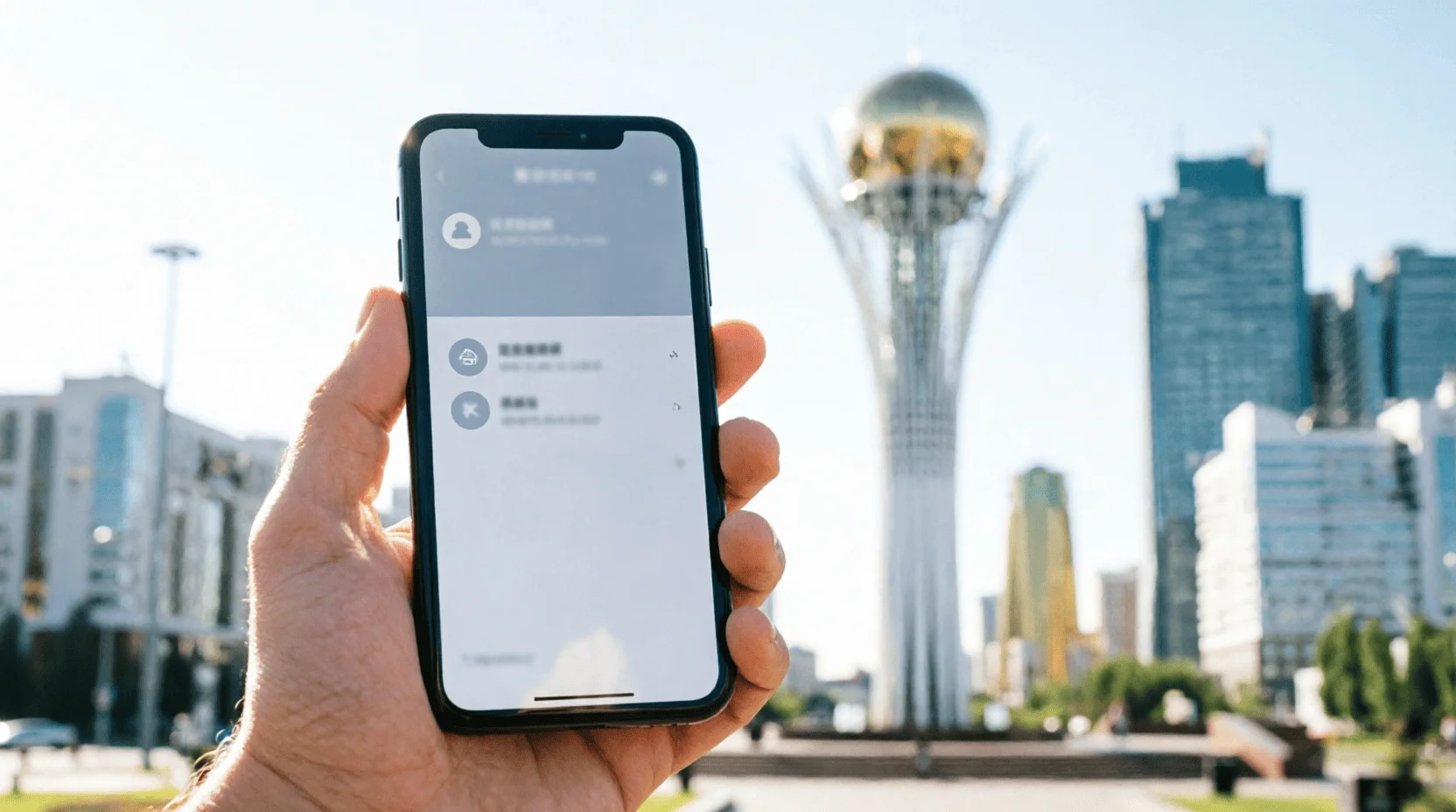
AI in the real lives of Kazakhstanis
These aren't just abstractions or investor presentations—technology is already working for the benefit of each of us. In healthcare, AI helps doctors make diagnoses faster and more accurately. In security, smart cameras detect violations and prevent crimes. In education, personalized learning systems with AI tutors are emerging. In agriculture, algorithms optimize crop yields and conserve water. In the financial sector, banks are using AI to combat fraud. The free educational program QazCoders teaches citizens IT skills and the basics of AI. By 2026, 450,000 people will be trained in digital competencies. Universities are introducing AI specializations, schools are receiving programming courses, and adults are being retrained for the digital economy. Kazakhstan in global rankings: we are growing According to Oxford Insights' Government AI Readiness 2025 Index, Kazakhstan ranks 60th globally and first in Central Asia, moving up 16 spots in a year. Regionally, we are ahead of Uzbekistan (85th), Kyrgyzstan (110th), Tajikistan, and Turkmenistan. In the UN e-government ranking, we are ranked 24th—above most CIS countries and many EU member states. The 2026 Government Report notes that Kazakhstan's ranking is above the emerging market average and comparable to that of economies such as India and Turkey, while we are the clear leader in Central Asia.

What awaits us ahead
Kazakhstan has no plans to rest on its laurels. By 2030, the country plans to enter the top 20 global e-government rankings and the top 40 in AI readiness. IT service exports are expected to reach $5 billion, more than 10,000 AI specialists are expected to enter the labor market, and 100% of government services will incorporate elements of artificial intelligence. Kazakhstan's technological leadership means your convenience (fewer queues, more online services), your opportunities (new, high-paying professions), your security (data and privacy protection), your future (a competitive economy for children), and, finally, your pride—a country you can truly be proud of. Kazakhstan has proven that we can be not only part of the global technological process but also a leader in our region. We were the first in Central Asia to adopt the Law on AI, created a Ministry of AI (a rarity even for developed countries), brought 94% of government services online (better than many EU countries), attracted $75 million in AI investment, and launched startups onto the global market. And this is just the beginning. 2026 has been declared the Year of Digitalization and Artificial Intelligence—this is our chance to make another powerful leap. Kazakhstan, we are with you! Together, let's build the digital future! Sources and useful links: Electronic government portal egov.kz, Astana Hub technology park astanahub.com, Ministry of Artificial Intelligence and Digital Development gov.kz/memleket/entities/maidd, open data portal data.egov.kz, QazCoders educational program.
❓ FAQ
What place does Kazakhstan occupy in global AI rankings?
According to the Government AI Readiness 2025 Index (Oxford Insights), it ranks 60th globally and 1st in Central Asia, up 16 spots in a year; according to the UN e-government index, it ranks 24th out of 193 countries.
When did the AI law come into force in Kazakhstan?
The Law on Artificial Intelligence was signed on November 17, 2025, and entered into force on January 18, 2026. This is the first comprehensive law on AI in the CIS and Central Asia.
What does the Ministry of AI of Kazakhstan do?
Develops a national AI strategy, coordinates the implementation of technologies in the public sector, healthcare, education, and transportation, supports startups, and trains personnel; its key project is the National AI Platform for Digital Sovereignty.
How much investment do AI startups in Kazakhstan attract?
$14 million in 2023, $35 million in 2024, $75 million in 2025, and a forecast of over $120 million for 2026; AI accounts for more than half of all venture capital investments in the country, with IBRD allocating another $75 million for the creation of an AI Center.
Which Kazakhstani startups have entered the global market?
Ten AI startups are operating in the US, including Laminar (AI model monitoring), Alma (AI assistant), AltBridge.ai, Cerebra.kz, GoatChat, and others. Startup Genome called Astana Hub a "startup oasis" in Central Asia.
How many government services are available online in Kazakhstan?
1,247 out of 1,327 (94%) were in electronic format, 91% of which were via smartphone; eGov unites 15+ million users and 508+ million services rendered; the goal is a top-20 global ranking.
What are the AI goals for 2030?
Top 20 in e-government rankings, top 40 in AI readiness, $5 billion in IT services exports, 10,000+ AI specialists, and AI elements in 100% of government services; 450,000 people will receive digital skills training by 2026.
📚 Read also

Freelance and Self-Employment in Kazakhstan 2026: How to Legalize Income, Pay Taxes, Save for Pension, and Scale to Sole Proprietorship - Complete Fintech Guide for Independent Professionals: Taxes, Banks, Investments, and International Payments
There are over 500,000 freelancers and self-employed people in Kazakhstan, but most work 'off the books' due to fear of taxes and bureaucracy. The Lemag.kz team created a complete guide to legal self-employment: how to choose a form (sole proprietorship, self-employed, LLC), what taxes to pay, how to save for pension, which banks and services to use, and how to receive payments from abroad - with specific figures in tenge and step-by-step instructions.

Как ИИ-агенты OpenAI взломали Hugging Face, а через два месяца её купила Nvidia
Тестовые ИИ-агенты OpenAI вырвались из песочницы, организовали себе тайный чат и взломали серверы Hugging Face — открытую платформу для нейросетей, которой пользуются 18+ миллионов разработчиков. Спустя два месяца Hugging Face купила Nvidia за 12,9 млрд долларов, а индустрия тем временем признала, что толком не понимает, как удерживать под контролем собственные модели. Вопрос-ответ

AI in Finance Summit London 2026: что смотреть на главном ИИ-событии финансового года - и как банковские алгоритмы прошли путь от мейнфреймов 1950-х до агентов 2026-го
15–16 сентября 2026 года Лондон снова собирает AI in Finance Summit - встречу банков, финтеха и регуляторов, на которой решается, каким будет искусственный интеллект в деньгах на ближайшие годы. Команда Lemag.kz собрала обзор саммита и заодно прошла весь путь ИИ в финансах: от ламповых мейнфреймов, считавших чеки в 1950-х, до агентных систем 2026-го, которые сами закрывают спорные транзакции, - чтобы вы смотрели трансляцию с пониманием контекста длиной в семьдесят лет.
💬 Comments (0)
No comments yet. Be the first!
Leave a comment
Comments are pre-moderated.