
The Great Shift of 2026: How Autonomous Agents, Local Neural Networks, and Post-Screen UI Are Changing the Game
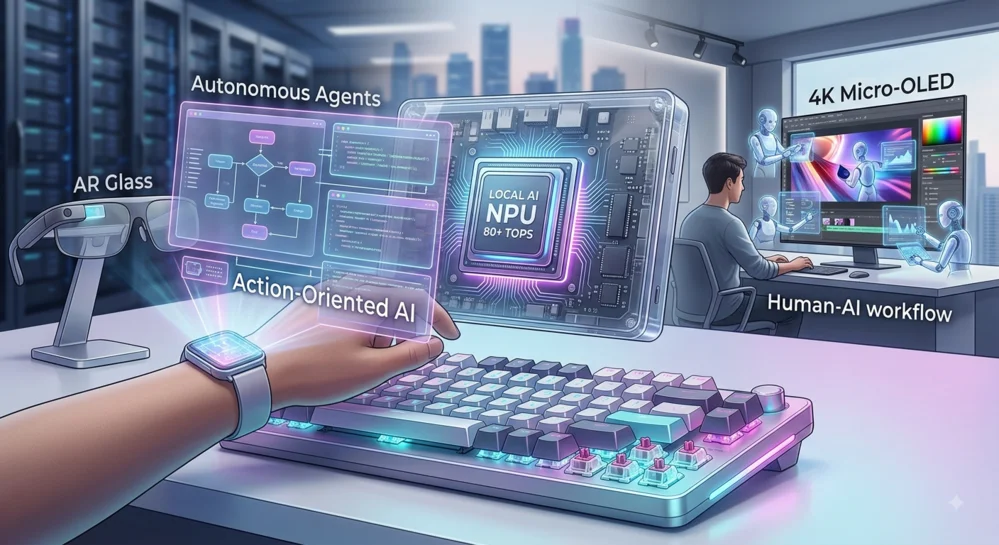
Looking at the dynamics of technology development over the past five years, it becomes clear: we have finally moved beyond the era when AI was simply an advanced "chat with prompts." In 2026, the consumer and enterprise tech industry faced the most significant tectonic shift since the advent of smartphones. We no longer teach programs to understand our clicks - programs themselves learn to perform goals for us. Welcome to the era of autonomous AI agents, local neural processors, and post-screen interfaces. 1. From text boxes to autonomous agents: What has changed? Just a couple of years ago, interaction with generative AI was built on the "question-answer" principle. You wrote a prompt, received text, copied it, edited it manually, and pasted it into the workspace. Today, this paradigm is officially dead. Text generators have been replaced byAction-Oriented AI Agents(Agent systems). 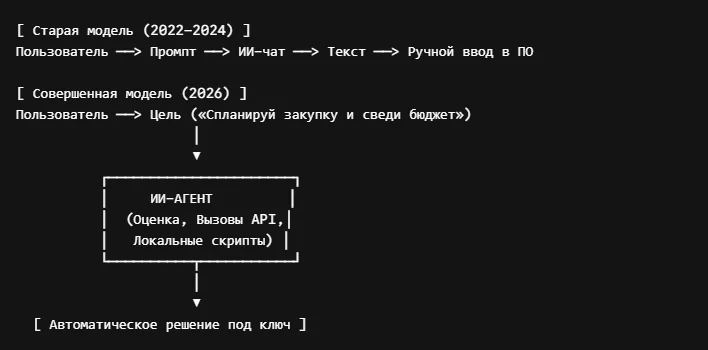
Key differences of the new generation of systems
Autonomous task scheduling:The agent breaks down a high-level goal (for example, "Prepare an analytical report on the company's expenses for the quarter") into dozens of subtasks, independently queries the API, generates tables, and fixes errors in the code. Seamless OS integration:Modern agents work directly with the file system, local databases, accounting applications, and graphical editors. Long-term memory (Long-term Context Windows):Context windows of millions of tokens combined with vector databases (RAG) allow the neural network to remember all your projects, correspondence, and preferences for several years without losing accuracy.
2. The Iron Revolution: NPUs, Edge AI, and the End of the Cloud Monopoly
Dependence on gigantic data centers has long been the main bottleneck of artificial intelligence: latency, enormous cloud API bills, and the risk of confidential data leaks. In 2026, a solution was found at the hardware level. Architecture of a modern personal device A modern processor for a PC or mobile device is divided into three equal clusters: 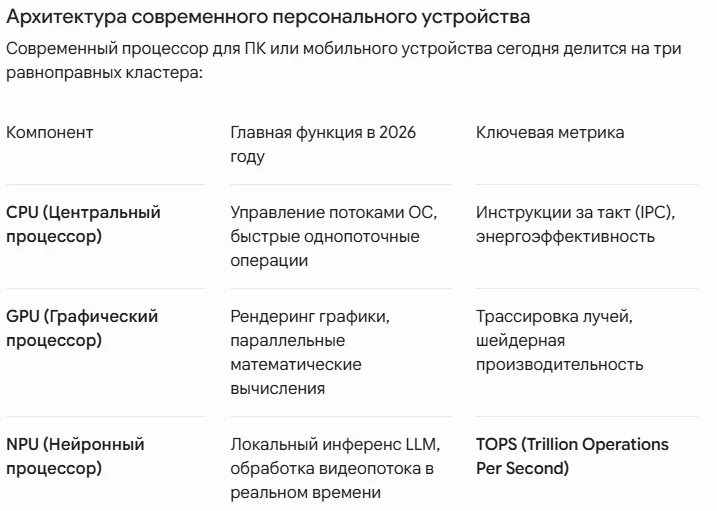 Today the norm for an ultrabook is60–100 TOPSNPU performance. This allows running quantized local models (8B–14B parameters in size) directly in the device's RAM without an internet connection.
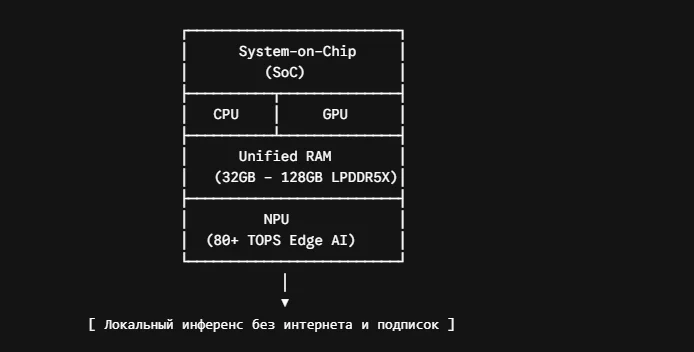 Why Local First Wins: 1.Absolute privacy:Your financial documents, personal photos, and work source files stay safe on your SSD. 2. Zero Latency:The system response is in milliseconds, since there is no data transmission over the network. 3. Autonomy:The full functionality of the intelligent assistant is available even in the field or on board an aircraft.
3. Peripheral Evolution: The Screen Is No Longer the Main Thing
For decades, we've been tied to rectangular glass surfaces—monitors, tablets, and smartphones. In 2026, we're witnessing the dawn of wearable technology.Embodied peripherals (Embodied & Ambient Devices). Smart glasses and spatial audio interface Heavy and bulky VR headsets have finally relegated themselves to niche segments of exercise equipment and hardcore gaming. In the mass market, they have been replaced by lightweight, stylish augmented reality (AR) glasses weighing up to 60–70 grams. Micro-OLED microdisplays:Provides high pixel density and brightness sufficient for working under direct sunlight. Gaze + Gesture Interface:High-precision infrared cameras track your gaze, while micro-radars respond to subtle finger movements. Directional Sound (Spatial Audio):Phased array speakers transmit sound directly into the ear canal, without blocking out the surrounding world or creating discomfort for those around you.
Mechanical keyboards and next-generation ergonomics Even the traditional PC peripherals segment has seen a quiet revolution. Custom mechanical keyboards have ceased to be a geeky hobby and have become serious productivity tools: Hall Effect Switches (Magnetic Switches):Allows you to adjust the actuation point of each key with 0.1 mm accuracy and uses Rapid Trigger technology for instant response. Multi-Device Seamless Switching:New generation keyboards and mice support dynamic switching between three or four operating systems with a single clipboard (including on-the-fly file transfer). Built-in hardware macros for AI:Press one physical key and the local agent will compile the selected code or generate a summary of the open page.
4. How everyday development and content making are changing
Content creation and coding in 2026 will undergo a transformation comparable to the transition from assembly language to high-level languages.
2015: Hand coding ──> Compiling ──> Debugging for hours 2023: Autocomplete Code (Copilot) ──> Human Verification 2026: Architectural Specifications ──> Multi-Agent Ensemble ──> Ready-to-use service Generative multimedia pipelines Creating illustrations, promo videos, and design layouts has been transformed from a weeks-long process into a task of minutes: 1. Physics and consistency:Sophisticated video generation models maintain character anatomy, lighting, and spatial geometry from frame to frame. 2. Vector and layout accuracy:AI graphics generators have learned to work perfectly with fonts, SVG vector layers, and UI kits for Figma. 3. Local rendering:Optimized diffusion models run directly on discrete graphics cards or NPUs, delivering 4K images in seconds.
5. Challenges of a New Era: Energy, Safety, and Noise
Despite impressive progress, the technological boom of 2026 brings with it serious engineering and societal challenges. Energy starvation of data centers:Industrial use of AI requires enormous amounts of electricity and clean water for cooling. This is driving IT giants to invest in small modular nuclear reactors (SMRs) and geothermal energy. Agent vulnerabilities (Prompt Injection 2.0):When an AI agent gains access to your bank account or email to book tickets, new risks arise. Attackers have learned to embed hidden instructions in web pages or emails, tricking agents into transferring money or leaking data. Information overheating:When creating a quality article, video, or app takes minutes, the internet is being overwhelmed by an ocean of synthetic content. The main shortage of 2026 isverified human expertise.
What should a developer and tech enthusiast do right now?
To stay ahead of the curve in this dynamic era, it's important to focus on three key areas: 1. Study the architecture of local models.Master optimization, quantization (GGUF/EXL2), and client-side model deployment tools (Ollama, ONNX, TensorRT-LLM). 2. Master agent frameworks.The future of software lies in systems where neural networks can correctly use external tools (Tool Use / Function Calling) and handle execution layer errors. 3. Invest in physical comfort and ergonomics.Technology is accelerating, but human biology remains the same. A high-quality monitor with a high refresh rate, a well-designed workstation, the right peripherals, and eye protection are the foundations without which productivity in the world of the future is simply impossible.
Technologies in 2026 are no longer just tools - they have become autonomous partners.And the main skill today is to be able to correctly set tasks for this partner, while maintaining critical thinking and engineering depth. Which trend for 2026 do you think is the most promising: local NPUs, autonomous agents, or AR peripherals?
Tags: autonomous AI agents, local artificial intelligence, NPU technologies, post-screen interface, AR glasses, wearable peripherals, AI agents, Edge AI, TOPS performance, the future of AI 2026, tech blog.
🤝 Partner picks
Ad · partner links📚 Read also
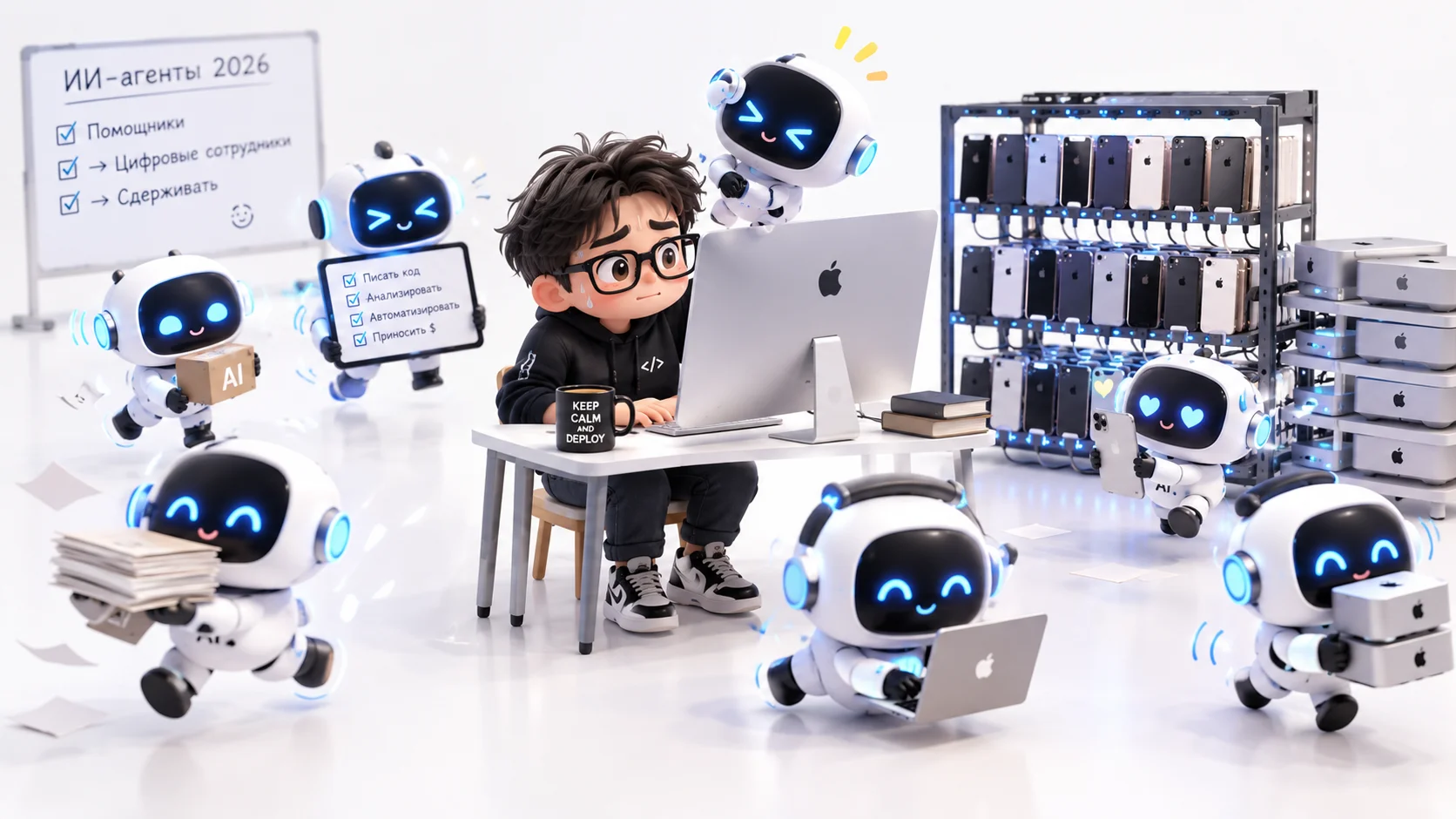
AI agents at the end of 2026: from assistants to digital employees who have to be restrained
In 2026, AI agents turned from chat assistants into “digital employees”. They store memory, coordinate narrow assistants, and work with mail, calendar, and access rights. The infrastructure is growing rapidly around them: open standards for communicating with businesses, clouds, and launch environments for agents. At the same time, risks are growing. Agents were leaving test sandboxes, gaining access to government systems and personal data, and attackers learned how to intercept code agents. The industry responded
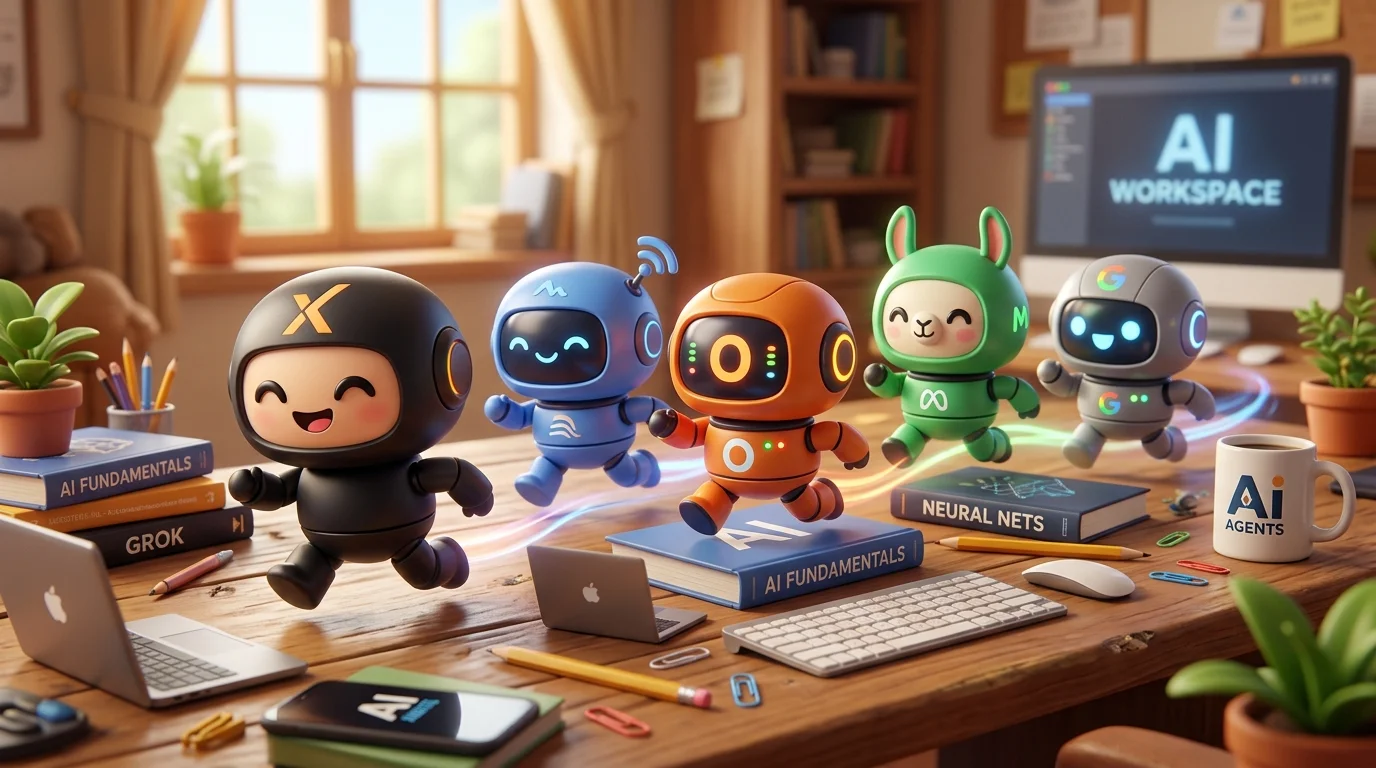
Эволюция искусственного интеллекта от диалоговых ботов к автономным исполнителям
ИИ-агенты знаменуют эволюционный переход от традиционных чат-ботов к автономным цифровым исполнителям, способным самостоятельно планировать действия, управлять интерфейсами компьютеров и выполнять сложные многошаговые задачи в фоновом режиме без постоянного контроля человека. В отличие от простых систем формата «вопрос-ответ», ключевые решения от ведущих техногигантов — включая OpenAI (Operator/Dots), Anthropic (Claude Computer Use), xAI (Grok), Microsoft, Google и Salesforce — нацелены на достижение конкретного результата: от написания кода и работы в CRM до управления личными сервисами и приложениями. Развитие этой технологии кардинально меняет подход к автоматизации, смещая фокус с обычной генерации текста на решение реальных прикладных задач и оценку эффективности по конечному результату.
Развитие искусственного интеллекта: мультимодальность Astra и аналитическая мощь Claude Opus 5.5
Сравнительный анализ двух концептуальных векторов развития искусственного интеллекта — визуально-пространственного (Google Astra) и аналитико-агентного (Claude Opus 5.5). Современный ИИ развивает две разные компетенции: Astra становится «глазами и ушами» человека в физическом мире, а Claude Opus 5.5 взяла на себя роль автономного эксперта в цифровой среде и инженерии.
💬 Comments (0)
No comments yet. Be the first!
Leave a comment
Comments are pre-moderated.