
Managing a Remote Team in 2026: A System Without Micromanagement – Processes, Meetings, Metrics

By 2026, remote and hybrid work became the norm for Kazakhstani companies—from IT and marketing to online stores. But with it came a major management failure: the manager loses sight of the team and resorts to micromanagement, employees drown in calls and chats, and results are eroded. The problem isn't the people, but the lack of a system. The teamLemag.kzI assembled this system piece by piece: communication, meetings, metrics, onboarding – with templates that can be implemented in 30 days.
1. Why Remote Teams Fail: Three Reasons
? Agreements in heads.In the office, rules were communicated verbatim: come over, see, remind. When working remotely, anything that isn't written down doesn't exist.
? Phone calls instead of work.Every unanswered detail turns into a meeting; by Wednesday, the team has 12 hours of calls and no deep work.
? Monitoring activity instead of results."Why aren't you online at 10:15?" - Micromanagement kills trust and encourages people to feign busyness.
Remote work doesn't forgive the chaos the office has tolerated for years: the system ceases to be an option and becomes the foundation.
2. Foundation: Three artifacts that are recorded on the first day
? Communication Code.Where and in which channel what is discussed: chat - quick questions, tracker - tasks, documents - solutions, email - external. Response time: chat - up to 2 hours, tracker - by the end of the day.
? Knowledge base.The onboarding document, procedures, response templates, and access permissions are all in one place; new employees answer the first 80% of questions themselves.
? Rhythm of the week.Monday - planning meeting, weekdays - daily, Friday - demo and retro; the meeting calendar is fixed and not negotiable.
3. Asynchronous communication: a database instead of phone calls
✍️ Writing rule.Solution = recording: discussed verbally - recorded in a tracker or document within an hour.
? Threads instead of a feed.Questions should be kept in threads and branches so that context doesn't get lost in the flow.
? SLA responses.Chat - 2 hours during work hours, tracker - until the end of the day, email - 24 hours; after 6:00 PM and on weekends - silence by default (this echoes our discussion of boundaries in the article on digital detox).
? Video instead of a meeting.Does your question require 10 minutes of explanation? Record a 3-minute screencast – the team can watch it at their convenience.
4. Meetings that Work: Three Formats
⚡ Daily - 15 minutes, standing.Everyone answers three questions: "I did it yesterday, I'll do it today," which is blocking them. We don't solve problems on a daily basis—we document them and discuss them with the right people later.
? Weekly planning meeting - 45 minutes.Weekly priorities by goals, task distribution, risks; decisions are made here, not in the chat later.
? Retro - once every 2 weeks, 60 minutes.Three columns: what worked, what didn't, what we're changing; each "change" is assigned an owner and a term.
? Anti-meetings."Meetings for the sake of meeting," statuses longer than 15 minutes, discussions without an agenda or owner - are cancelled without explanation.
5. Tasks and Transparency: The Tracker as a Source of Truth
? Readiness criterion.A task has a "definition of done": what is considered done, who accepts it, and where the result is stored. "Make a post" is bad; "post published, reviewed by an editor, announced on three channels" is good.
One term, one owner.A task has one responsible person; if there are two owners, there is zero responsibility.
? Statuses are honest."Stuck" is a normal status; the team learns to raise blockers early, rather than heroically remain silent until the deadline.
6. Performance metrics instead of online hours
? Three axes of evaluation.Result (tasks completed according to criteria and on time), quality (returns, errors, edits), communication (SLA responses, recording agreements).
? Weekly goals in the “goal + number” format.Not "work on the store," but "add 10 product cards with a card conversion rate higher than 2%."
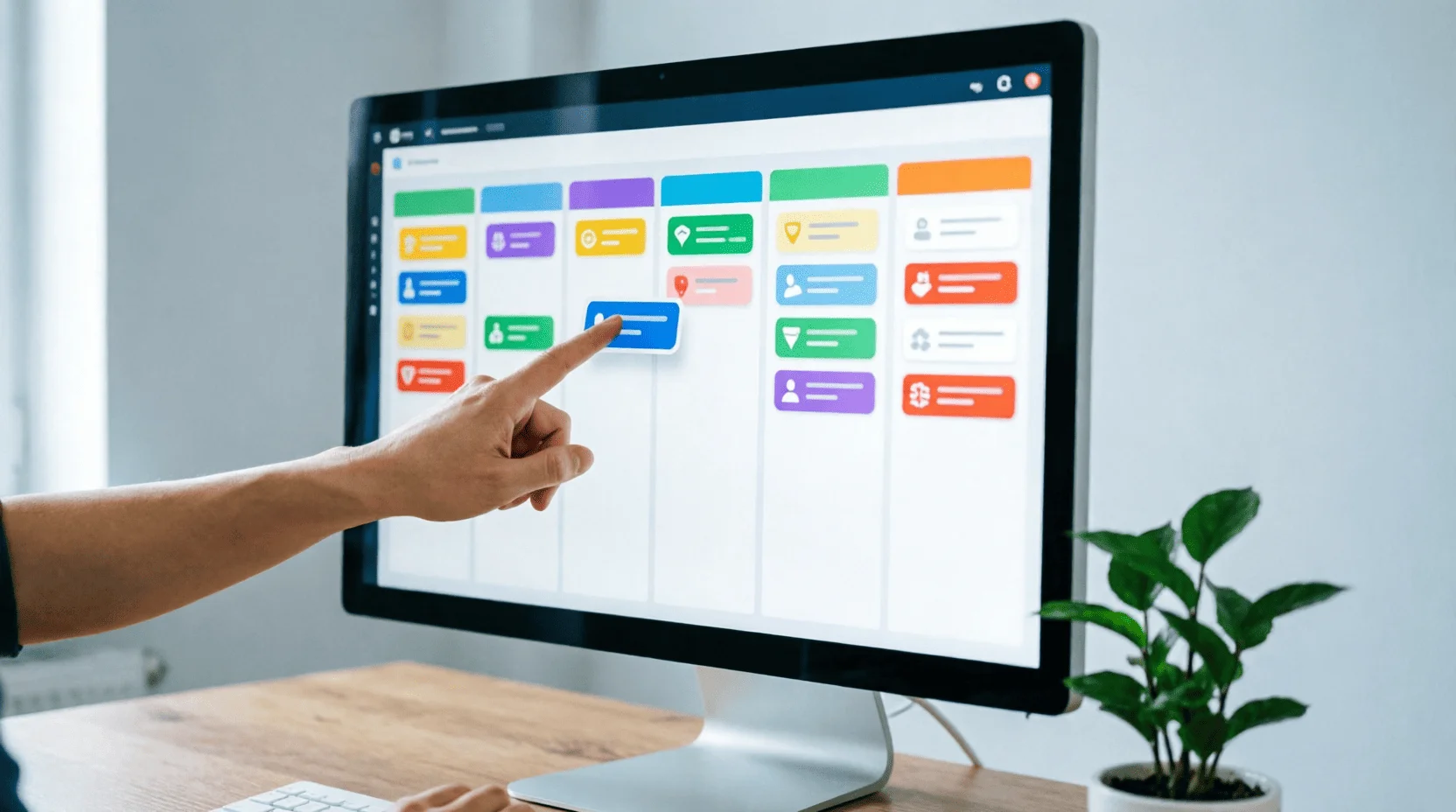
? Transparent dashboard.One page with the team's weekly goal progress: green/yellow/red; discussed in meetings, not in private messages.
? AI assistance.The assistant compiles a weekly summary of tasks and metrics from tracker data—we demonstrated this connection in the article about AI time management for entrepreneurs.
7. Trust and anti-micromanagement
? Delegate the result, not the process.We agreed on the "what" and "when" - the "how" remains the employee's responsibility; intervention in the process is only upon request or red status.
? Transparency instead of surveillance.An open tracker and dashboard provide managers with a clear picture without questioning; screenshots of activity are a way to simulate work.
? Right to make mistakes.An error raised early is material for a retro; an error hidden before the deadline is an opportunity for a serious conversation about communication.
8. 1-on-1: the manager's main tool
? Regularity.Once every 2 weeks for 30-45 minutes with each person; canceling 1-on-1 is a signal that the person is not important.
? Employee agenda.70% of the time, the employee speaks: what's holding them back, what drives them, where they want to grow; the manager asks questions and removes blocks.
? Fixation.1-on-1 agreements are recorded in a common document with dates - we start with them at the next meeting.

9. Onboarding a remote employee in 30 days
? Week 1 - context.Access, a knowledge base, 30-minute meetings with each team member; the first small victory is a realistic task with clear criteria.
? Week 2 - Rhythm.Participation in daily and planning meetings, first medium-sized task with a mentor.
? Week 3 - independence.A task without a mentor, but with an intermediate check; initial feedback on the assessment axes.
? Week 4 - Onboarding Retro.What worked in onboarding and what didn't is updated; the employee receives a plan of goals for the quarter.

10. The 2026 Tool Stack for a Small Team
? Up to 5 people - free.Chat (Telegram), documents (Google Docs), Kanban (Trello) - the base is closed without a budget.
? 5–20 people - paid stack.Notion or ClickUp (knowledge base + tracker, 3,000–6,000 tenge/user per month), Zoom/Meet for meetings, Figma for design; total 15,000–30,000 tenge per team per month.
? AI layer.Assistants for meeting summaries and minutes: call recording → summary → tasks automatically added to the tracker; saves managers 3–5 hours per week.
11. Boundaries and burnout in remote work
? Right to be offline.After work, the "unavailable" status is the norm; a manager who posts at 11:00 PM creates a culture of anxiety.
? Vacations without a quick peek.A complete shutdown with a handover of tasks - otherwise, vacation does not restore, and the team learns to wait.
? Personal rituals.Morning practices and digital hygiene from our lifestyle articles – personal burnout prevention for leaders and teams.
12. Mistakes that kill a remote team
? Micromanagement of activity.Surveillance of online status creates the illusion of work and draws away the strong.
? It's all in calls.Lack of written decisions = eternal “who said what.”
? Goals without numbers."Trying" cannot be measured - the team is working in vain.
? Retro without changes.Discussed and forgotten - demotivation is stronger than the absence of retro.
13. 30-Day Implementation Plan
? Four weeks until the system
- Week 1 - Agreements.Communication code, response SLA, minimum knowledge base (onboarding document).
- Week 2 - Rhythm.Launch daily meetings, planning sessions, and retrospectives according to regulations; cancel all meetings outside the format.
- Week 3 - Metrics.Tracker with readiness criteria, weekly goals dashboard, first assessment on three axes.
- Week 4 - People.Launch 1-on-1 on schedule and updated onboarding; retro of the month - what we're changing in the system.
Result:The remote team of 2026 is managed not by oversight, but by a system: written agreements instead of "air," three meeting formats instead of twelve, performance metrics instead of hours spent online, and onboarding that makes newcomers part of the team within 30 days. Implement a four-week plan, and micromanagement will become unnecessary: the system itself will show where the team is succeeding and where it's stuck. ?
❓ FAQ
How to monitor remote employees without micromanaging?
Monitor results, not activity: each task has a completion criterion and a deadline; a transparent task tracker replaces online status monitoring.
What meetings do remote teams really need?
Three formats: daily 15-minute meeting (synchronization), weekly 45-minute meeting (priorities), and biweekly retro (process improvement). Everything else is asynchronous.
What to do if an employee disappears while working remotely?
First, agree on a response time (chat SLA), then one-on-one discussions about the reasons; if the pattern continues, reconsideration of the work format, not surveillance.
What tools are free for a small team?
Telegram/chat + Google Docs + Trello/Kanban board cover a user base of up to 5 people; paid stacks (Notion, ClickUp) cost from 3,000 to 6,000 tenge per user per month.
How to evaluate the performance of a remote employee?
On three axes: result (closed tasks according to criteria), quality (errors, returns), communication (compliance with SLA responses and agreements).
How long does it take to implement the system?
30 days according to the plan in the article: a week for agreements, a week for meeting rhythm, a week for metrics, a week for onboarding documentation.
📚 Read also

Жизнь на связи 24/7: Как смартфоны изменили мир и какую цену мы за это платим
С приходом смартфонов жизнь человечества кардинально изменилась: мы получили постоянный доступ к знаниям, возможность работать из любой точки мира и мгновенную связь, однако круглосуточная доступность принесла с собой серьезные вызовы для здоровья и продуктивности. Проводя в телефоне в среднем около 4,5 часов в день, люди всё чаще сталкиваются с размытием личных границ, рассеиванием внимания, синдромом упущенной выгоды (FOMO) и технострессом от непрерывного потока уведомлений. Научные исследования подтверждают, что вечернее синее излучение экранов подавляет выработку мелатонина и сдвигает циркадные ритмы, существенно ухудшая качество сна. Чтобы сохранить физическое и ментальное благополучие без ущерба для эффективности, важно соблюдать цифровую гигиену: отключать гаджеты за час до сна, менять телефон на обычный будильник, фильтровать уведомления и регулярно устраивать полноценные паузы от цифрового пространства.

Feedback and Difficult Conversations 2026: How to Speak So You're Heard and Keep People Engaged - Models, Scripts, and Case Studies
People rarely leave because of tasks – they leave because of silence: when they go months without talking about either positive or negative issues, and then "explode" with dismissal or reprimand. The Lemag.kz team has put together a working feedback system: SBI and COIN models instead of a "sandwich," scripts for difficult conversations from deadlines to salaries, and a 30-day plan for implementing a culture – so conversations don't feel so scary.

Hiring in 2026: How to Find, Evaluate, and Retain Strong Individuals - A Recruitment System for Small Businesses Without an HR Department
A bad hire costs small businesses between 1.5 and 3 million tenge and six months of frustration—and this isn't the price of "malicious intent," but of a lack of system. The Lemag.kz team has distilled the hiring process into a clear pipeline: a job description, a filtered vacancy, a structured STAR interview, a paid test, and an offer you can be proud of. Channel pricing is in tenge and the 30-day plan is included.
💬 Comments (0)
No comments yet. Be the first!
Leave a comment
Comments are pre-moderated.