
Decluttering 2026: How to Let Go of Things Without Regret and Free Up Your Home – System, Rules, and Where to Put Things in Kazakhstan
The average apartment accumulates up to 30% of items that haven't been used for a year or more: they take up shelves, eat up minutes of every morning ("where's the other sock?"), and for years, they remain in the background as a decision to "clean out this weekend." Decluttering isn't a spring cleaning or a one-day marathon after which everything returns: it's a system of decisions that changes your relationship with your things forever. TeamLemag.kzI put it together without fanaticism—with rules against regret and a map of the fate of things in Kazakhstan: from resale with a receipt in tenge to recycling.
1. Why Things Stick: The Four Roots of Stiffness
? The effect of spent."But it cost 40,000"—the money is already gone, and storage won't get it back; an item only regains its value one way—by selling it.
? "What if it comes in handy?"Fear of a hypothetical future; the test is simple: if you haven't used it in a year, the probability approaches zero, and shelf rent is paid daily.
? Other people's meanings.Gifts hold other people's gratitude and guilt; a gift fulfills its function at the moment of giving; after that, it becomes your property, not your debt.
? Memory in objects.Sentimental is the most difficult category; it is dealt with last and according to separate rules, rather than in the general marathon.
A thing that is not used is not property, but a tenant of your space without a contract.
2. Four questions before "leave"
❓ Solution checklist
- Have I used this in the last 12 months?(we count seasonally by seasons)
- Does it work and is it in good condition?(What's broken is either fixed in a week or goes away)
- Would I buy it the same way today?(no = the thing is here by inertia)
- Am I holding this out of joy, not guilt or fear?
Three "no"s out of four = the item leaves the house; doubt = a "quarantine" box with a date in 6 months: if you don't open it, it leaves without looking.
3. The order of categories is from easy to hard.
? 1. Clothes.The most voluminous, but emotionally average category; trains the method on a large volume.
? 2. Books and paper.A bit harder: "I'll read" lives on for years; the rule is to keep what you've read, your favorites, and references, and leave the rest in good hands.
? 3. Kitchen and bathroom.Duplicates, expired items, "box sets"; quickly and very noticeably on empty shelves.
? 4. Miscellaneous (common).Wires, boxes from equipment, duplicate tools; this is where the "what if" half lives.
❤️ 5. Sentimental.Last and separately: letters, children's drawings, heritage; according to the rule of photography and "units of joy".
Why exactly so?The method is pumped up on the easy: you come to the sentimental with the skill of solution, and not with fatigue and tears.
4. Techniques that work better than willpower
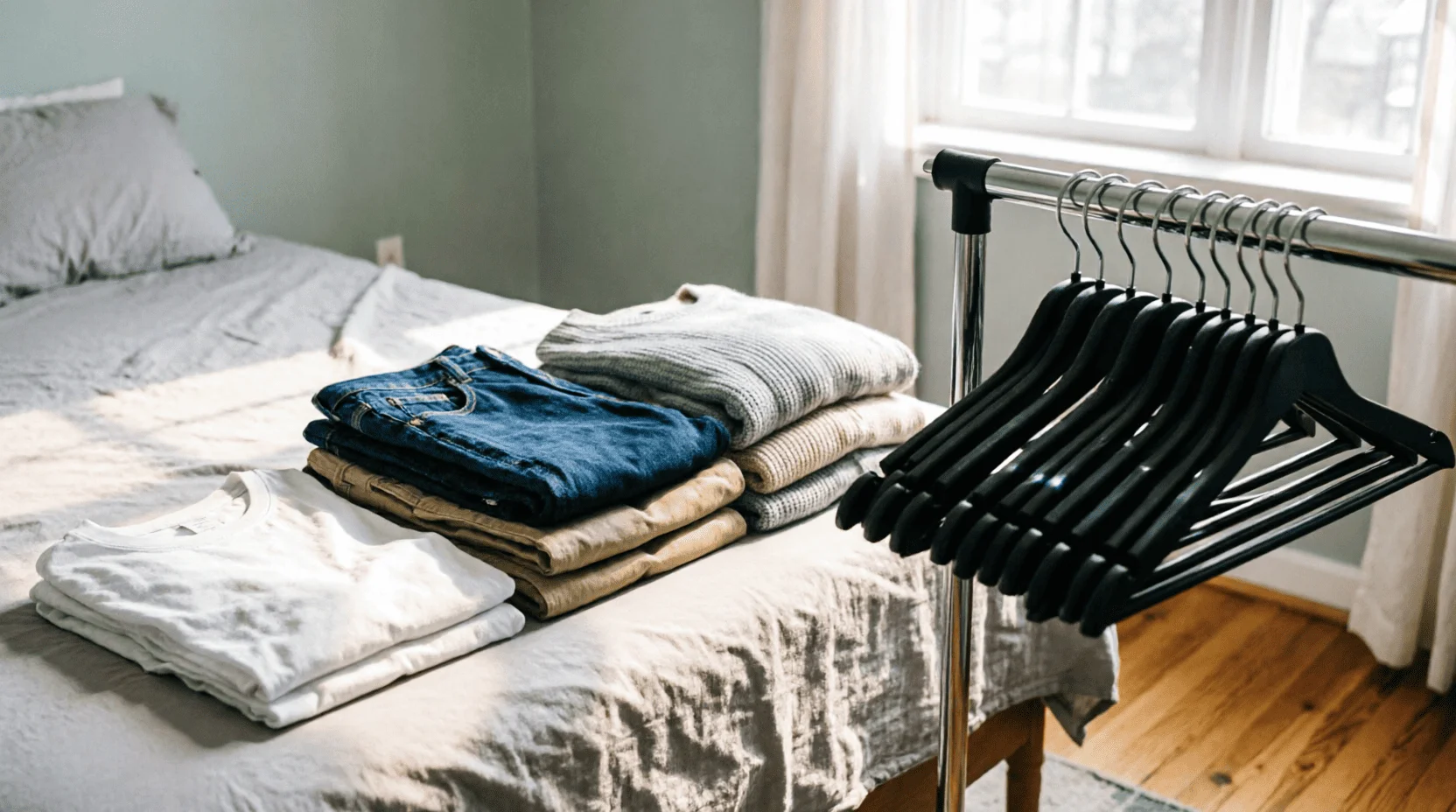
? The hanger trick.All hangers have the hooks facing inward; when putting the item on, turn the hooks outward; after a season, the hooks facing inward = candidates for going out, including the "just in case" ones.
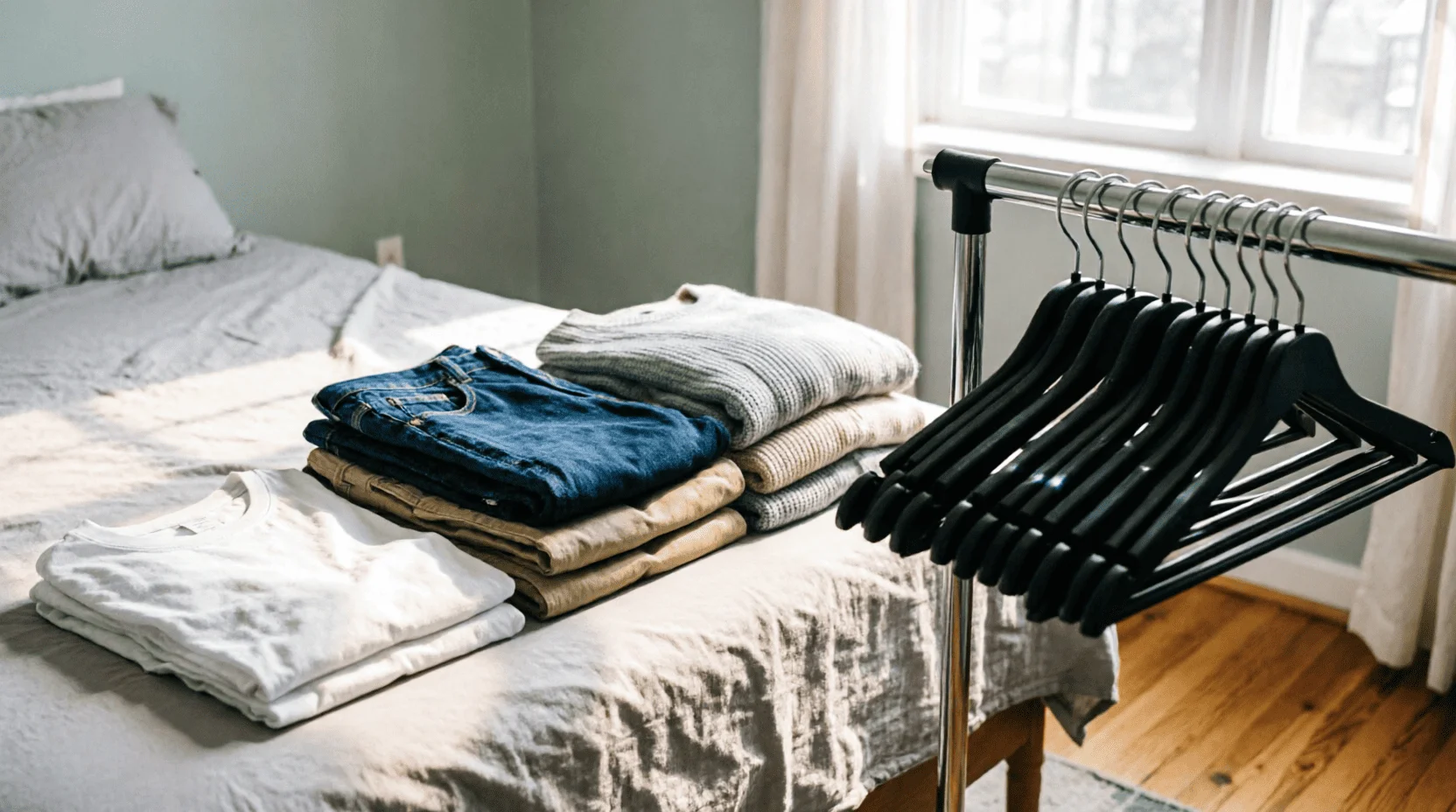
? One heap method.Clothes are collected from all over the house in one spot on the bed: only after seeing the entire volume does the brain agree that “a few blouses” are 47 blouses.
⏱ Timer 20 minutes.One zone, one timer; decluttering with a marathon burns you out, while decluttering with sessions becomes a habit.
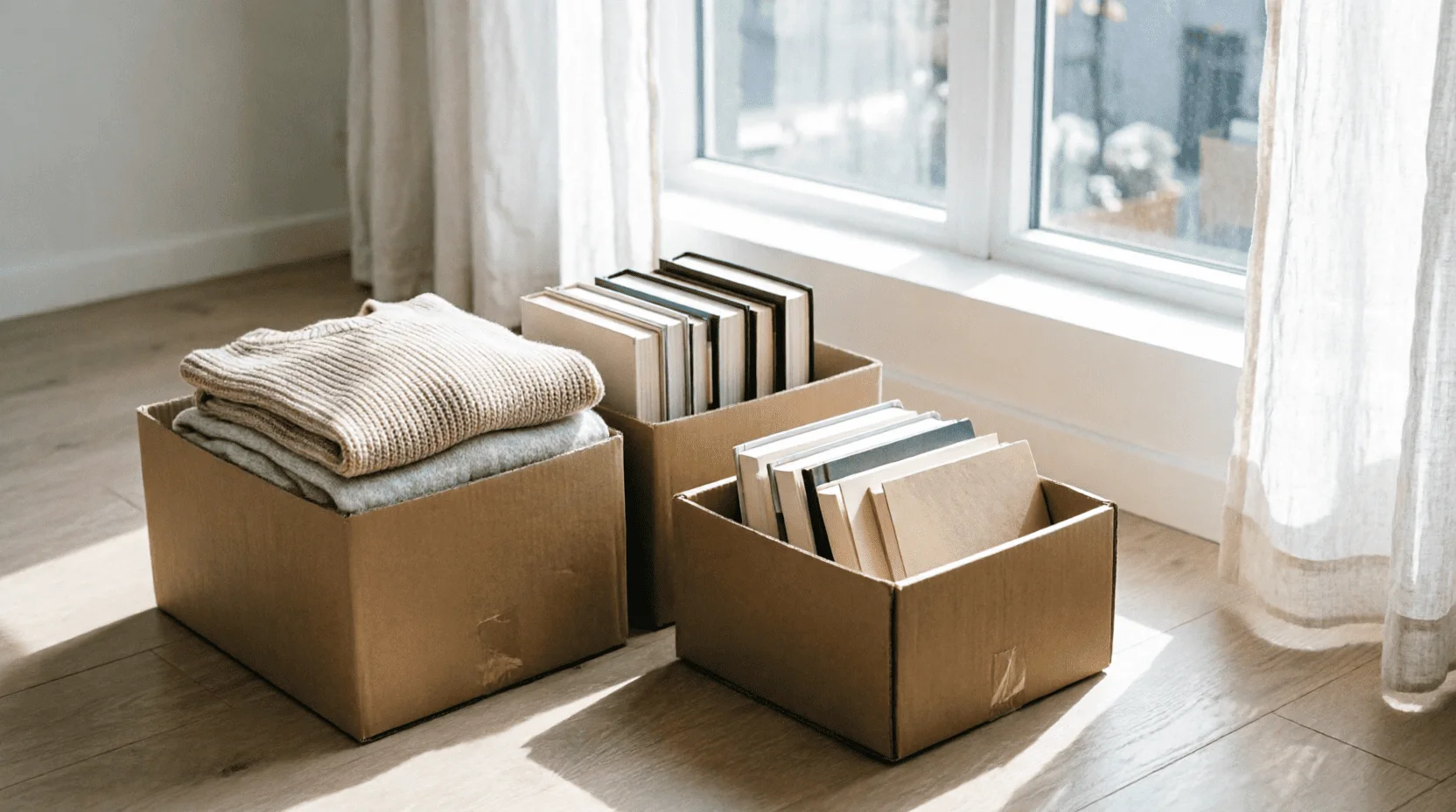
? Boxes at the exit.Three boxes at once: "sell," "donate," "recycle"; anything that hasn't left the house within two weeks goes back into the closet—they reconsider their decision, rather than storing it in the hallway.
5. Category by Category: Quick Rules
? Clothes.Duplicates of black are reduced to two; "between sizes" is gone; home is not "old to go out," but a separate, conscious set of 5-7 things.
? Papers.Documents with expiration dates are placed in a folder; warranty documents are photographed and disposed of; journals and printouts older than a year are waste paper, not to be read "for the last time."
? Kitchen.One bottle opener, two cutting boards per person, and mugs for the number of people in the room plus two; the "wedding box" sets are divided and dispensed.
? Wires and equipment.An unknown cable without a device is discarded immediately; unused equipment older than 7 years is resold or sent to electronic recycling.
? Children's things.The "next size" box in the attic is one, not five; toys—the one-box-per-child rule: new ones come in when the old ones are chosen and released by the child themselves (this is also a lesson in decisions).
6. The Fate of Things in Kazakhstan: Four Roads
? Resale.Kolesa, OLX, Instagram garages, second-hand marketplaces: electronics, gadgets, baby strollers and car seats, designer clothing; fair price = 30–50% of new for electronics and 20–40% for clothing; consignment shops charge 20–40%, but save weeks of back-and-forth.
? Donat.Charitable foundations, social stores, and church clothing collection points: warm and whole clothes go to families in difficult situations; donation rule: give what you wouldn't be ashamed to give to a friend.
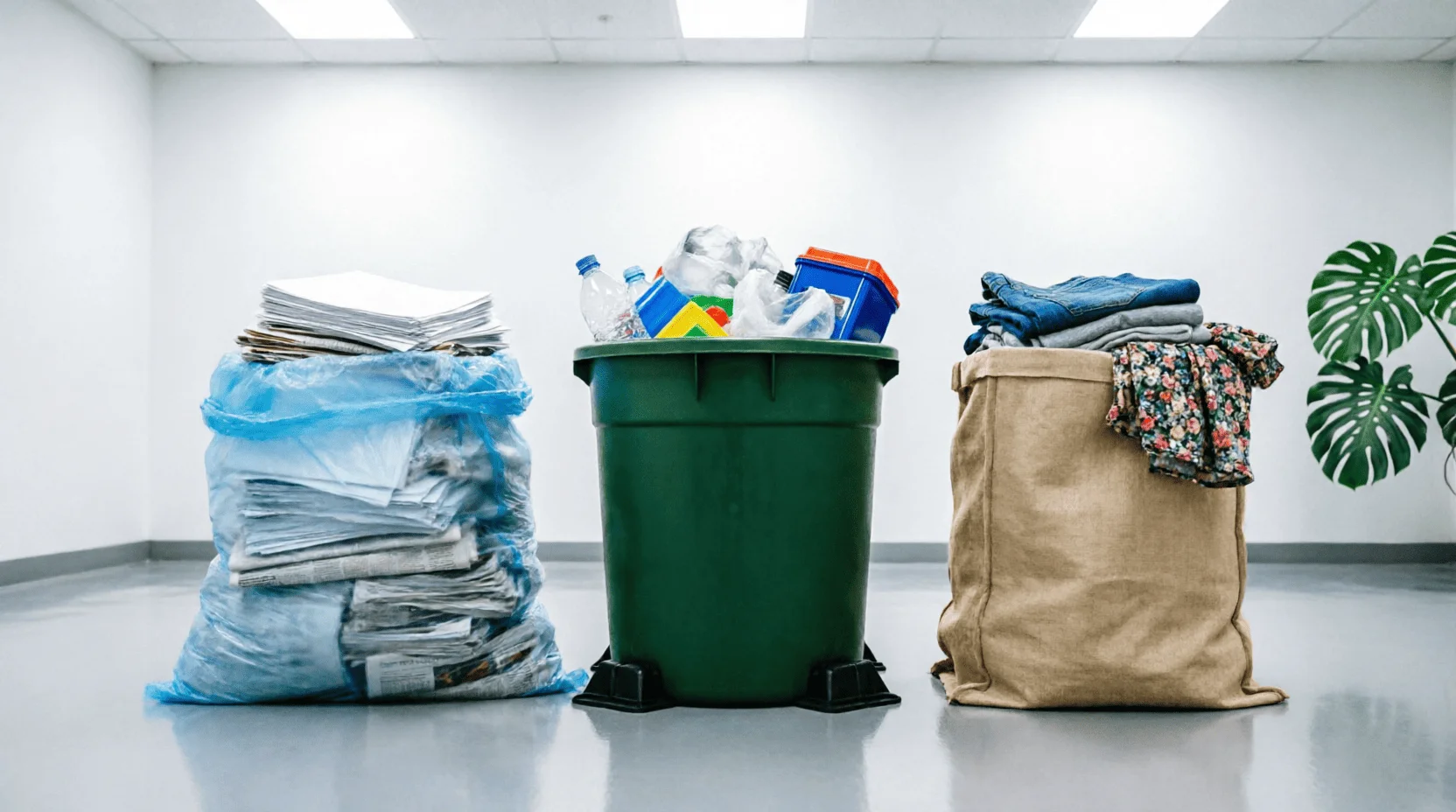
♻️ Recycling.Paper, plastic, glass, metal, and textile collection points in Almaty, Astana, Shymkent, and other major cities; batteries, lamps, and electronics should be placed in designated collection points only, never in the bin.
? Swap and upcycle.Swap parties and garage sales in residential complexes: exchange without money; tired but durable textiles - into rags and upcycling workshops.
Road order rule:sell → give away → recycle → and only then the tank; the tank is the last road, not the first.
7. Economics of decluttering: receipt in tenge
? Realistic income from an apartment:
| Категория | Оценка |
|---|---|
| Техника и гаджеты (телефон, ноутбук, консоль) | 60–150 тыс. ₸ |
| Детское (коляска, автокресло, велосипед) | 40–90 тыс. ₸ |
| Брендовая одежда и обувь | 30–80 тыс. ₸ |
| Мебель и интерьер | 20–60 тыс. ₸ |
| Книги, посуда, мелочи | 10–30 тыс. ₸ |
Total 160–410 thousand ₸— the cost of any space management course; plus the freed-up space: in Almaty, one wardrobe "for storage" costs as much as the rent for 2-3 square meters of housing.
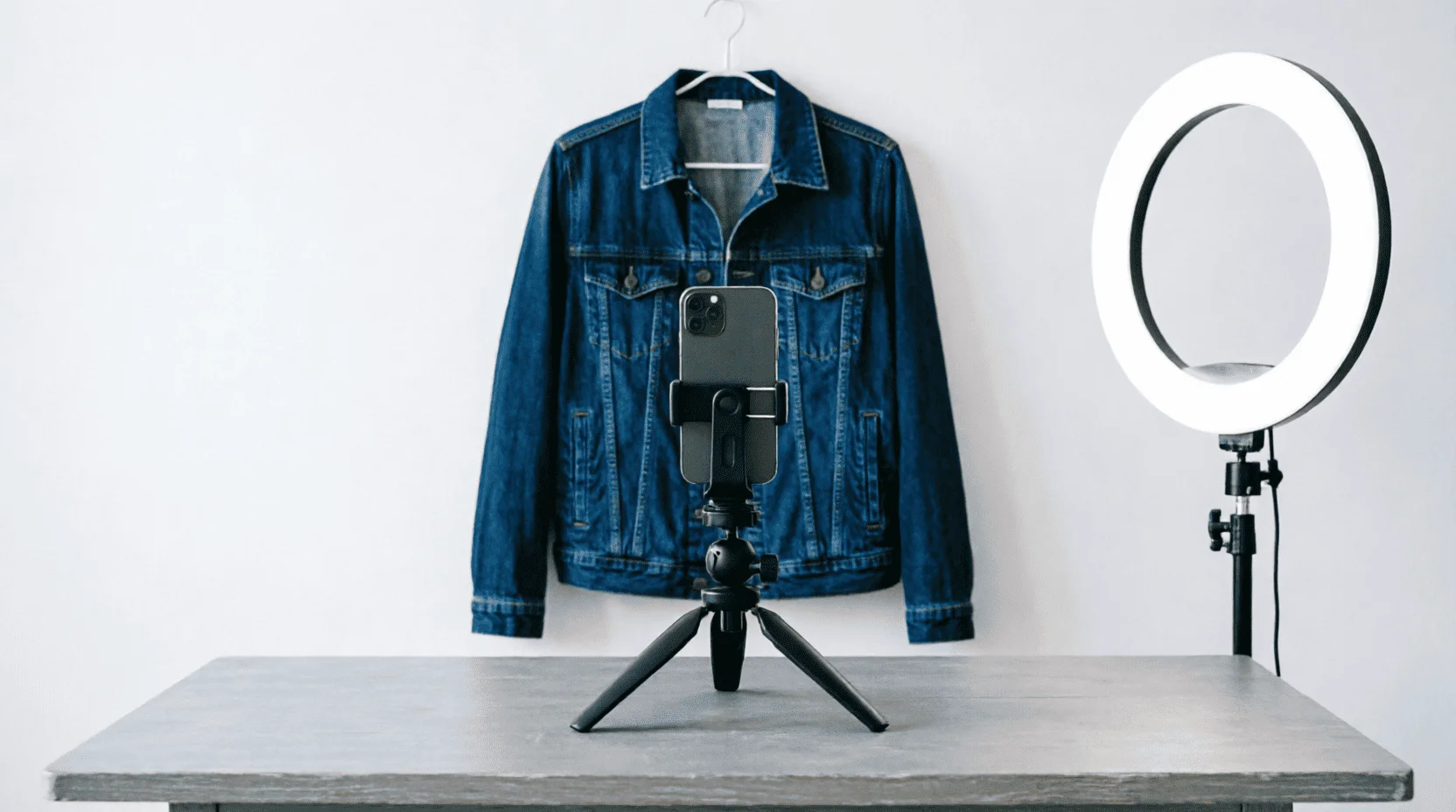
? Sales rule.A clean item + 4 photos in daylight + an honest description of the defects sells three times faster; we discussed phone photography in our article on neural networks for content – background and lighting determine the price.
8. Digital Decluttering: A Short Companion to Physical Decluttering
? Minimum takes.Photo library: screenshots and duplicates are deleted in batches overnight; a personal cloud or home NAS (see our article on personal cloud) makes the archive manageable.
? Subscriptions.Autopayments are reviewed quarterly: any unused payments for 3 months are disabled—usually 5–15 thousand tenge/month is returned to the budget.
Rule:Digital clutter is lighter than physical clutter, but it takes up the same amount of attention; one evening after physical decluttering covers both layers.
9. Storage after decluttering: a system, not containers
Movement zones.A thing lives where it is taken and returned: keys by the door, scissors in a desk drawer, and not “in a box on the mezzanine.”
? Containers after, not before.Boxes and organizers are purchased to cover the remaining amount, not before decluttering—otherwise, they themselves become junk.
? Visibility.Transparent boxes or signatures; what is not visible and not signed ceases to exist and is duplicated by the purchase.
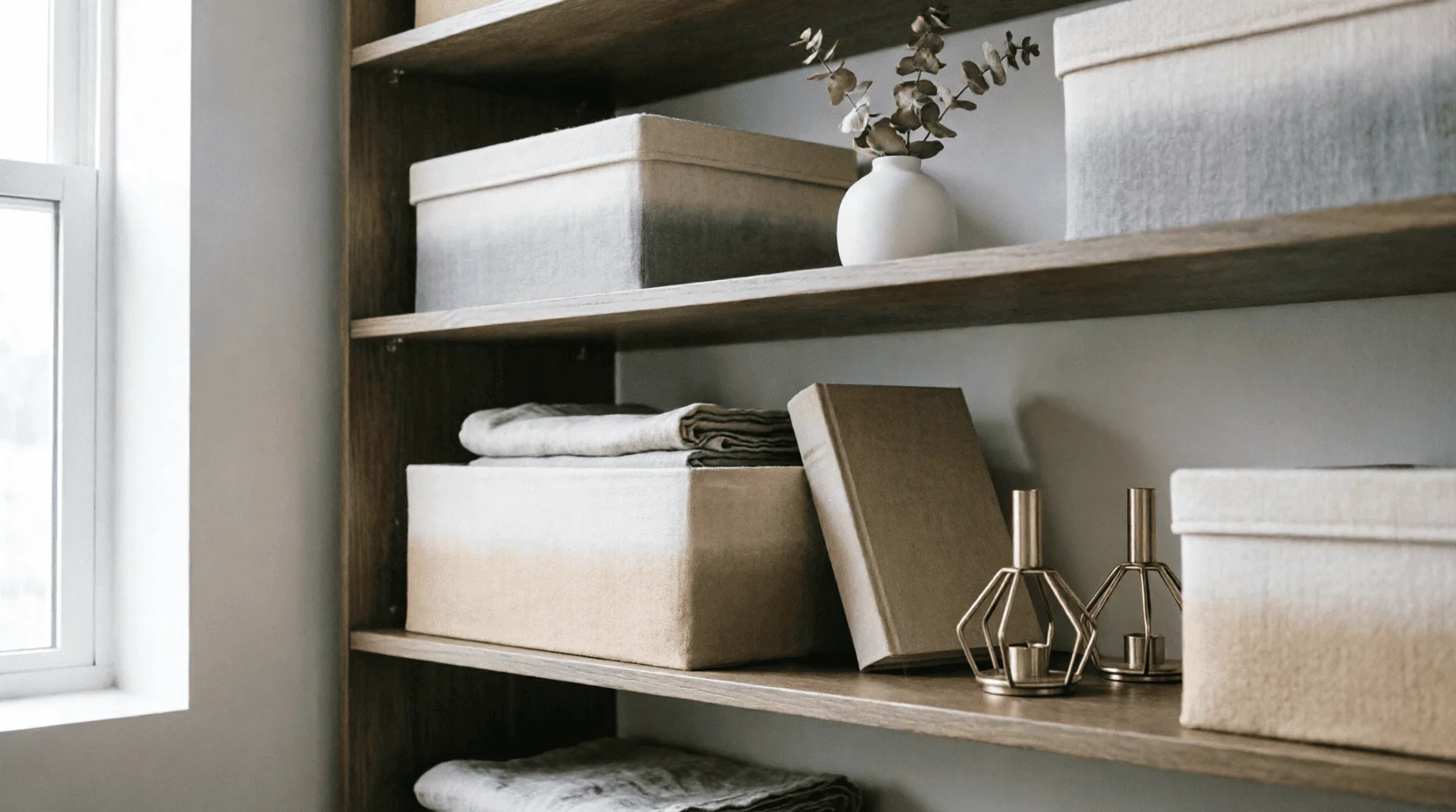
Vertical and air.The shelves are filled to 70%: the air reserve is what distinguishes the system from a warehouse.
10. Minimalism without fanaticism: the "enough" level
? The goal is not emptiness, but lightness.Sufficiency test: every item can be found in 30 seconds, every shelf breathes, every morning begins without searching.
??? Family.Common areas are governed by the rules of the system, while private areas are sovereign: a teenager has the right to chaos in his own room, provided that hygiene and the boundaries of the common area are observed.
? Collections are not junk.A conscious collection with a display case and a catalogue is a hobby; a chaos of identical boxes in a garage is a warehouse; the difference is in management, not in quantity.
11. Habits that keep junk from coming back
? Incoming inspection.The one-entry rule: a new item in the same category displaces the old one; a stock package is not an achievement, but an incoming flow that requires a solution.
? List 30 days.An impulsive desire lives on the list for a month: 80% of the items die on their own, the surviving ones are purchased consciously and serve for years.
? Gifts.An agreement with loved ones to offer experiences instead of things; an unaccepted gift is released without guilt—its function has already been fulfilled.
? Parcels and packaging.Equipment boxes last for two weeks (warranty inspection), then flattening and recycling; no one's "what if it's a return" lasts longer than a year.
12. Decluttering Mistakes
? Containers before dismantling.Buying organizers for an unknown quantity is a classic practice that adds clutter instead of freedom.
? One day marathon.12 hours straight burn until the rebound: after a month, everything returns to normal; 20-40 minute sessions maintain the results.
? Decluttering someone else's stuff.Sorting through your husband, wife, or teenager's things without asking destroys trust faster than it builds order; they always start with themselves—and this is contagious.
? Everything in the tank.Throwing something whole and warm into the dump = lost money and conscience; four roads from section 6 resolve the issue in one weekend.
13. 30-Day Plan: From Shelf to System
? Four weeks
- Week 1 - Acceleration.A bathroom shelf, a spice drawer, a nightstand; three boxes by the door; the first resale sale for dopamine.
- Week 2 - Clothing.One pile method and hanger trick; send "sell" and "give away" within 48 hours.
- Week 3 - papers, kitchen, utilities.Document folder, deadline revision, wires without owners; recycling center in one visit.
- Week 4 - Storage and Rules.Zones and signatures, buying containers for the remainder, a family agreement on the one-entry rule; sentimental - one box and a photo rule.
14. Links to other Lemag.kz articles
? Interior— the freed space is like a canvas for design, not a warehouse for boxes.
? Digital Detox— digital decluttering as a companion to physical decluttering: files, subscriptions, notifications.
? Financial literacy— resale revenue to the budget and subscription revision as a cost-saving item.
? Meal prep— a kitchen without duplicates and expired items: a work surface instead of a storage area for bags.
Result:Decluttering in 2026 isn't an ascetic or marathon, but a system of decisions: four questions before "leaving," an ordering of categories from light to heavy, four paths for things, and habits for incoming control. Start with a shelf and a 20-minute timer, send the first box within 48 hours, and count the resale revenue—in a month, you'll find your home has become larger, your mornings quicker, and your decisions easier: the space has returned to you, not to your things. ?
❓ FAQ
Where to start decluttering if everything is neglected?
Start with the smallest and easiest area: a bathroom shelf or a spice drawer; a 20-minute victory provides a dopamine rush and a method for cleaning out the closet; starting with something sentimental is a guarantee of quitting halfway through.
How to throw away things with memories?
The rule of photography: photograph a sentimental object and let it go—memory lives in the photo and the story, not in a shoebox; keep the pieces that evoke joy now, not a debt to the past.
Where to dispose of things in Kazakhstan, other than trash?
Resale: Kolesa, OLX, Instagram garages and second-hand marketplaces; donations: charitable foundations and social stores; recycling: paper, plastic, glass, and textile collection points in Almaty, Astana, and major cities; swap parties and shelters accepting textiles and other items.
How much can you make from decluttering?
A realistic estimate is 80,000–300,000 tenge for an average-sized apartment: electronics and gadgets account for half the price, while designer clothing and strollers/car seats account for the rest. Consignment stores take 20–40%, and selling it yourself takes longer but is more expensive.
Is minimalism suitable for a family with children?
Yes, in the "enough, not empty" version: children's things follow the "outgrown, gone" rule with the next-size box, toys follow the one-box-per-child rule; family minimalism is a system of turnover, not empty shelves.
How to avoid getting overgrown with things again?
Three habits: the one-entry rule (buy something new and let go of the old one from the same category), a 30-day wish list (the impulse dies within a month), and entry control of parcels and gifts: not everything brought into the house has to stay there.
What shouldn't be thrown in the regular trash?
Batteries, lamps, electronics, medications, and paint are toxic waste and are taken to special collection points; textiles are not thrown away, but recycled or sent as rags.
📚 Read also

Digital Detox 2026: How to Regain Your Focus in 30 Days – From Phone Settings to Offline Hobbies
The average Kazakhstani in 2026 spends 6-7 hours a day on their phone—that's a quarter of their waking life. The Lemag.kz team has put together a digital detox system that works without drastic measures: 10-minute phone setup, offline alternatives to scrolling, and a 30-day plan—with budgets in tenge and real results.

Smartphone vs. Cradle: How Mobile Phones and Social Media Have Changed Birth Rates—Globally and in Kazakhstan
Before the smartphone era, there was a gradual decline in fertility in the 20th century due to "classic" reasons (urbanization, education, contraception). 2007–2012 – a sharp turnaround immediately after the release of the iPhone: research by the NBER and the University of Cincinnati links this to a 3–8% drop in the birth rate among young people in the US. After 2010–2012, the era of social media – Instagram and algorithmic feeds – exacerbate the trend; the graph shows that the decline in different countries (USA/UK – 2007, France/Poland – 2009, Mexico/Indonesia – 2012, Africa – 2013–2015) occurs with the same delay after the advent of smartphones, rather than simultaneously. The mechanism is a diagram with hypotheses: less face-to-face communication → fewer couples → later marriage → lower fertility. Kazakhstan is a special case: the TFR increased from 2.62 (2012) to a peak of 3.13 (2020), and then declined to 2.96 (2023), in sync with the saturation of the internet (92% of the population) and social media (14 million users). A section on how smartphones aren't the only reason, plus a list of sources.

Morning Routine 2026: 10 Rituals for Energy and Productivity – From Neurosleep to Kazakh Tea
Morning in 2026 isn't about "getting up and running," but a conscious sequence of rituals that sets the tone for the entire day. The Lemag.kz team has compiled 10 effective practices—from sleep and light trackers to Kazakh tea with steppe herbs—and shown how to tailor your routine to your goals: energy for training, focus for work, or calm before a challenging day.
💬 Comments (0)
No comments yet. Be the first!
Leave a comment
Comments are pre-moderated.