
Neural Networks for Content in 2026: How to Create Video, Photos, and Sound with AI – Tools, Pricing, and Workflows
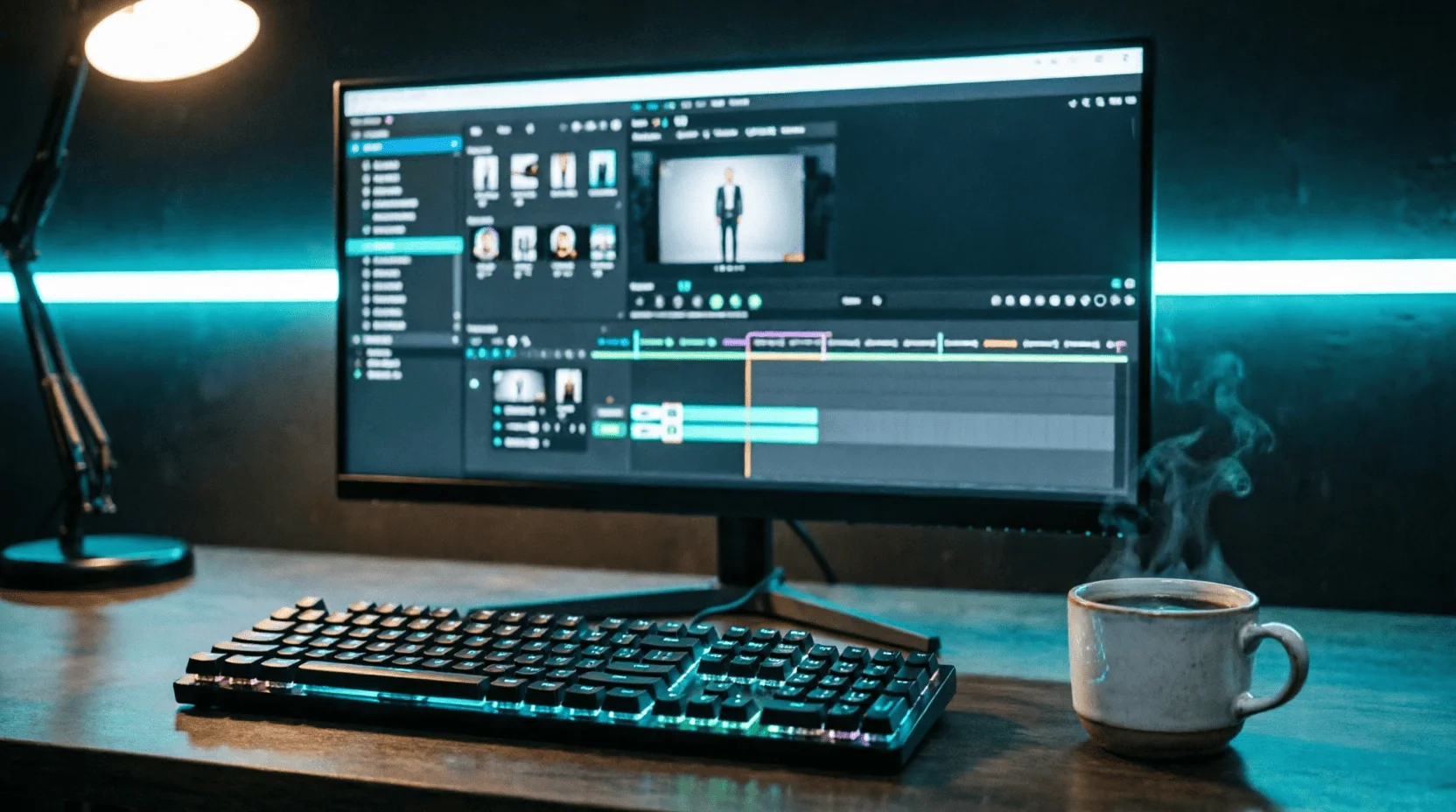
Just three years ago, "a neural network made a video" sounded like a gimmick; in 2026, it's a working assembly line: commercials are assembled in an evening, product photos are taken without a studio, and voiceovers in three languages are done without a narrator. The teamLemag.kzI analyzed current video, photo, and audio generation tools, calculated prices, verified payment methods from Kazakhstan, and assembled ready-made bundles "for the task"—from reels to marketplace cards.

1. Four types of generative content – and four classes of tools
? Video.Text and image-to-video models for 5-60 second videos: advertising, reels, intros, B-roll.
? Images.Product photos, illustrations, covers, backgrounds, and additional detail shots.
? Zak.Voice acting, voice cloning, music and sound design.
✍️ Text and scripts.Scripts, storyboards, and prompt packages are the foundation without which the other three layers cannot function.
The power of 2026 is not a single “magic button,” but a set of tools for a specific task.
2. Video: Who's Making Videos in 2026?
Kling and Pika are the workhorses of the short forms.5-10 seconds per generation, stable physics, ideal for reels and shorts; free daily limits allow you to learn without investing.
? Runway Gen-4 — control and consistency.Characters hold their faces between scenes; a tool for commercials and mini-movies.
? Sora-like models are "movies from text".Long takes and cinematic lighting; subscription access, generating a minute of content takes minutes.
⚪ Local video models.They require 16–24 GB of VRAM (we calculated the hardware in the article about a computer for AI); they offer privacy and zero subscription fees—the choice of those who generate in bulk.
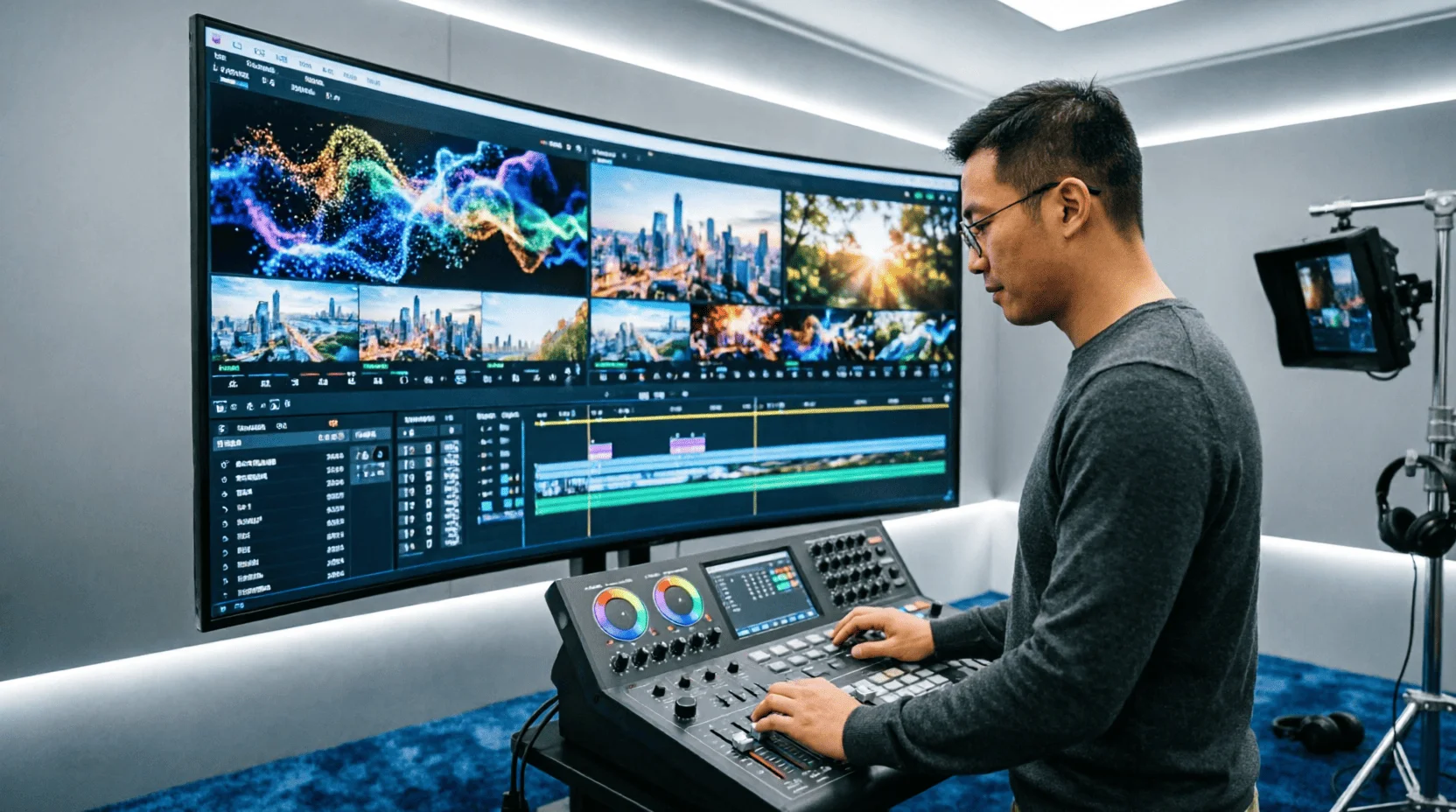
? Link for reels:Script in LLM → storyboards in Flux → animation in Kling → cutting and subtitling in the editor → publishing. An evening of work instead of a day of shooting.
3. Images: Studio in browser
? Midjourney v7 — aesthetics out of the box.The best "taste" by default: covers, mood boards, concepts; subscription, commercial rights included.
? Flux is the king of details and text in images.Artifact-free signs, packaging, and lettering; local versions available—free with your own hardware.
? Ideogram and similar apps — for marketplaces.Product cards: an item on a generated lifestyle background in seconds; we demonstrated the effect in conjunction with resale from the article about part-time work.
? Inpainting and additional shooting.Adding an object to the frame, removing unnecessary elements, expanding the background to the desired format—routine tasks that AI has completely eliminated.
Product Rule:One subject - three backgrounds - five seconds of choice; this is how A/B versions of cards are assembled without a photo studio.
4. Sound: voiceover without a narrator and music without a composer
? ElevenLabs is the benchmark for voice acting.Natural pauses and intonations; clone your own voice in 10 minutes of recording—and your articles are read by the podcast. The free trial limit is for testing, and the paid limit is for production.
? Dubbing into three languages.Lematized translation + timbre-preserving synthesis: the article is published in Russian, Kazakh, and English audio versions—the same as the texts on Lemag.kz.
? Suno and Udio - music for the task.Jingles and background tracks for reels without strikes: generated by mood and tempo descriptions; check the license for commercial use.
? Noise and mastering.AI-powered echo and noise removal makes "phone-shot" recordings podcast-ready.
5. Text and Scripts: The Foundation of the Connection
? Script in 10 minutes.LLM writes the video structure: hook - pain - solution - CTA; a person edits in 15 minutes instead of two hours from scratch.
? Prompt packages.A good video prompt = subject + action + camera + light + style; keep a library of successful formulas as code.
? Brand context.Load your assistant with your brand's voice (we discussed it in the article on visual language) and the scripts will be consistent.
6. Ready-made combinations for tasks
? Three conveyor belts that are already operating today
- Reels for Business:LLM script → Flux frames → Kling animation → ElevenLabs voiceover → subtitles → publication. Budget: subscriptions ~15–20 thousand tenge/month, time: evenings.
- Marketplace cards:Photo of the item on a phone → Ideogram/Flux backgrounds → upscaling → A/B testing of two cards. Budget: almost nothing, time: 20 minutes per item.
- Podcast from the article:Text → Translation → Dubbing with a clone → Jingle in Suno → Episode ready. Budget: Voiceover subscription, Time: 1 hour.
7. Payments from Kazakhstan: Working Methods 2026
? Foreign card.A Kazakhstani bank card with a foreign currency account isn't accepted everywhere; non-resident cards or virtual fintech cards are more reliable.
? Intermediary services.Subscriptions are paid for with a 10-15% commission; choose those that provide a receipt for tracking expenses if you're on e-Salyq.
? Gift cards and crypto.Some platforms accept it directly; exchange rates and volatility are your risk.
Rule:Count the cost of subscriptions as part of the cost of content—for commercial use, this is a business expense, not a hobby.
8. Hardware: Cloud or your own PC
☁️ Cloud— Start without investment: pay for generations, not for hardware; downside: subscription fees for serial production.
? Your PC— with a flow of 100 generations per month, local Flux pays for itself within a quarter; VRAM and configuration guidelines are in our AI computer analysis: 12–16 GB for images, 16–24 GB for video models.
? Hybrid:Drafts and experiments are local, final heavy videos are in the cloud.
9. Law and Labeling: What are the Author's Obligations in Kazakhstan?
? Marking.Law No. 230-VIII of the Republic of Kazakhstan "On AI" requires the marking of synthetic content: on websites—with a meta tag and schema markup (as Lemag.kz does), and on social media—with the note "created using AI" in the description.
© Commercial rights.Commercial use is permitted on most services' paid plans; keep your receipts and screenshots of your plan—these are your documents in case of a dispute.
? Strange faces and voices.Cloning a real person's voice and face is only permitted with their written consent; "bringing to life" a celebrity for advertising is a surefire way to get sued.
? Deepfake stop.Content that misleads about the reality of events is a matter of administrative responsibility; artistic conventions must be understood.
10. For Business: Where AI Content Generates Instant Cash
? Cards and banners.The conversion rate of a card with a lifestyle background is 15–30% higher than that of a white background—at a zero cost photo shoot.
? Advertising.10 creative options in an evening instead of two in a week: test pain-benefit combinations on a small budget.
? Local business.Menus, posters, and stores for cafes and salons are generated in your brand style in minutes; the visual brand code from our article frames the prompts.
11. For extra income: AI content as a service
? Niches 2026:Voiceovers for articles and product cards, turnkey reels packages, product backgrounds for sellers, and podcast jingles.
? Numbers:An 8-reel package costs 60,000–120,000 tenge; voiceover for an hour of text costs 15,000–25,000 tenge; a set of flashcards costs 25,000–50,000 tenge. The entry threshold is a subscription and a week of practice; we covered AI services in detail in our article on part-time work.

12. Errors that "plastic" content produces
? Without human editing.Raw generation is read in seconds; 15 minutes of hand polishing marks the pros.
? Overload of effects.The face morphing and "jelly" hands are defective; regenerate with a different seed, and don't publish as is.
? Ignore sound.Bad voiceover can ruin even a beautiful video; sound is half the experience.
? Unmarked.Unmarked synthetic content poses a legal risk and loss of audience trust.
13. 30-day development plan
? Four weeks until your first paid order
- Week 1 - Images:Flux/Midjourney, 30 generations per day, library of successful prompts.
- Week 2 - Video:Kling/Pika, 10 videos of 5 seconds each, edited in a simple editor.
- Week 3 - Sound:ElevenLabs, voice-over of three of their texts, jingle.
- Week 4 - Bundle:One turnkey mini-project for yourself or a familiar business → case in portfolio → first 2–3 orders.
Result:Generative content in 2026 is a craft with its own tools: video, photos, and audio are combined into bundles that produce in an evening what used to take a budget and a week of work. Start with one task and one tool, label synthetic content according to the laws of the Republic of Kazakhstan, and count subscriptions as a cost—and AI will become not a toy, but a machine that produces content and revenue. ?
❓ FAQ
Which neural networks for content are free?
Local Flux and Stable Diffusion are completely free if you use your own PC; cloud-based versions offer free limits: Kling and Pika allow several generations per day, and ElevenLabs allows 10 minutes of voiceover per month.
Can AI content be used commercially?
Yes, most services' paid plans include commercial rights; for local models, check the specific license (Flux Dev has restrictions, Flux Schnell has more freedom).
How do I pay for a neural network subscription from Kazakhstan?
Foreign cards, subscription payment intermediaries, or gift cards; some services accept crypto payments. The intermediary fee is usually +10–15%.
Should AI content be labeled in Kazakhstan?
Yes, according to the Law of the Republic of Kazakhstan "On AI" No. 230-VIII, synthetic content must be marked. On the Lemag.kz website, this is implemented using a meta tag and schema markup; for social media, add a note in the description.
What kind of computer is needed for local generation?
Minimum RTX with 12-16GB of VRAM for Flux and SDXL; 16-24GB is comfortable; see our AI PC breakdown for more details.
Will neural networks replace videographers and designers?
Routine – yes: storyboards, rough cuts, product backdrops. Filming live people, events, and a signature style – no; demand is shifting to those who control AI.
Where should a beginner start?
One task - one tool: a week on images (Flux/Midjourney), a week on video (Kling/Pika), a week on sound (ElevenLabs); then assemble the bundle on a real mini-project.
📚 Read also
Эволюция искусственного интеллекта от диалоговых ботов к автономным исполнителям
ИИ-агенты знаменуют эволюционный переход от традиционных чат-ботов к автономным цифровым исполнителям, способным самостоятельно планировать действия, управлять интерфейсами компьютеров и выполнять сложные многошаговые задачи в фоновом режиме без постоянного контроля человека. В отличие от простых систем формата «вопрос-ответ», ключевые решения от ведущих техногигантов — включая OpenAI (Operator/Dots), Anthropic (Claude Computer Use), xAI (Grok), Microsoft, Google и Salesforce — нацелены на достижение конкретного результата: от написания кода и работы в CRM до управления личными сервисами и приложениями. Развитие этой технологии кардинально меняет подход к автоматизации, смещая фокус с обычной генерации текста на решение реальных прикладных задач и оценку эффективности по конечному результату.
Развитие искусственного интеллекта: мультимодальность Astra и аналитическая мощь Claude Opus 5.5
Сравнительный анализ двух концептуальных векторов развития искусственного интеллекта — визуально-пространственного (Google Astra) и аналитико-агентного (Claude Opus 5.5). Современный ИИ развивает две разные компетенции: Astra становится «глазами и ушами» человека в физическом мире, а Claude Opus 5.5 взяла на себя роль автономного эксперта в цифровой среде и инженерии.
Такси без водителя: Waymo, Cybercab, Yandex и перспективы в Казахстане
Waymo (Google) ездит по США с 2020 года: десятки городов, 4 пассажира, лидар + камеры, уже выезжает на трассы. Цена примерно как у Uber. Tesla Cybercab только стартовал в сентябре 2026 в Остине: 2 места, без руля и педалей, только камеры. Обещают сильно дешевле — до $0,20–0,40 за милю. В Казахстане Yandex уже тестирует роботакси в Алматы. Пилот в трёх городах, коммерческий запуск — 2027. Будущее ближе, чем кажется. Кто быстрее сделает поездки дешевле и безопаснее?
💬 Comments (0)
No comments yet. Be the first!
Leave a comment
Comments are pre-moderated.