
Quantum computers in 2026: How qubits work, what they will change, and why your password is still safe
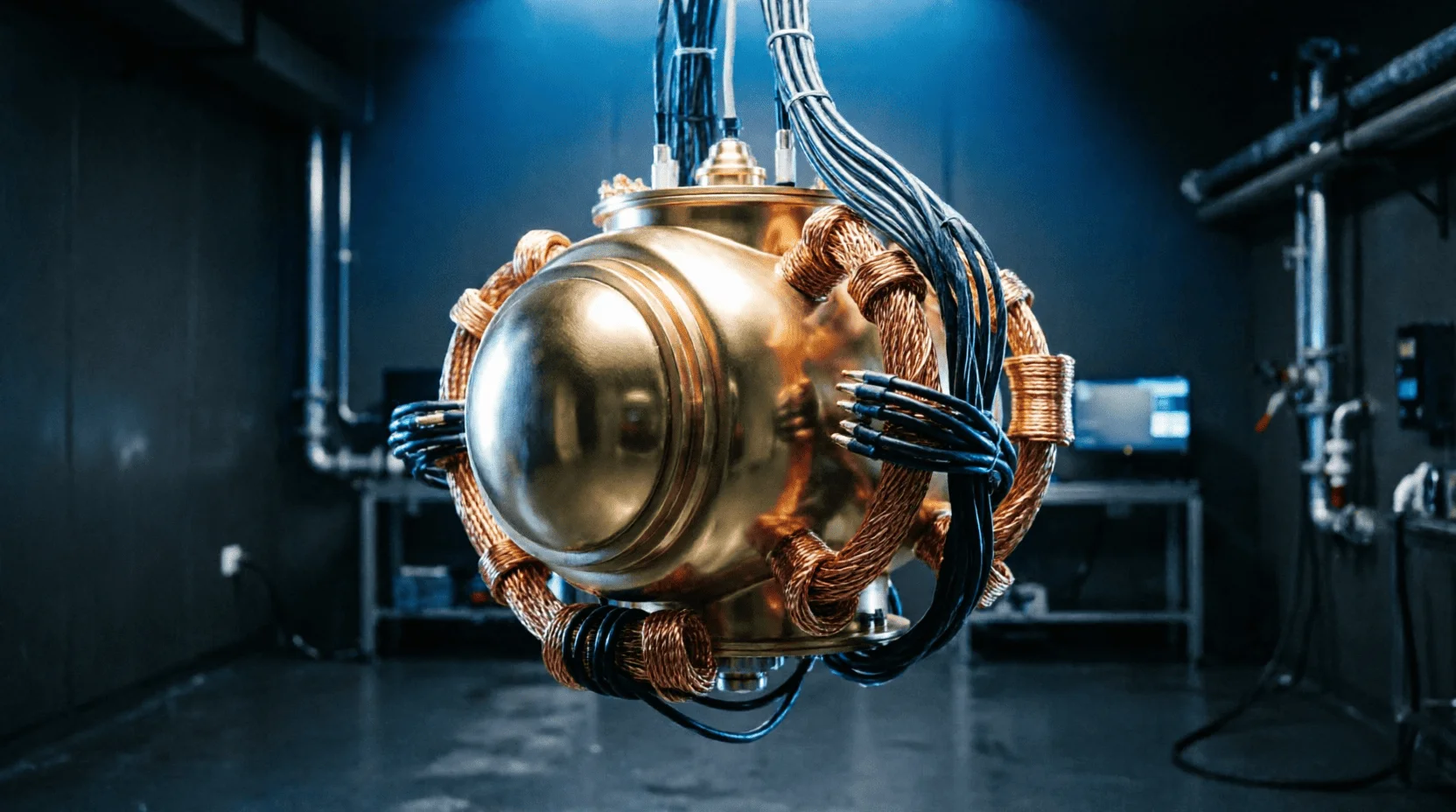
The quantum computer is the most misunderstood technology of the decade: it's been credited with quickly cracking all passwords and replacing the home PC. The reality is more interesting and calmer: it's a specialized machine that calculates not faster, butotherwise, using the laws of quantum physics. In 2026, the industry made a quiet turnaround—from demonstrations to the first practical applications. The teamLemag.kzExplains the technology using analogies without formulas and examines what this means for your data, business, and Kazakhstan.
1. Bit versus qubit: one analogy instead of formulas
? Classic beat— a switch: either 0 or 1. All classical computing equipment—from a calculator to a supercomputer—goes through the options in turn.
⚛️ Qubit— a coin in flight: while it's spinning, you can't tell whether it's heads or tails; it's in a superposition of states. And when there are multiple coins and they're "entangled," the system describes not just one outcome, but an entire field of probabilities.
? Analogy with a labyrinth.A classical computer searches for a way out by trying corridors one after another; a quantum computer is like filling a labyrinth with water from all entrances at once: correct paths are reinforced, dead ends are suppressed.
Important:A quantum machine doesn't "try everything out instantly"—it interferes with probabilities so that the correct answer becomes the most likely; to do this, the problem must be encoded in a special way.
2. Superposition, entanglement, and interference are the three pillars of physics.
? Superposition.A qubit lives in a mixture of states before measurement; this allows a system of N qubits to describe 2^N combinations simultaneously—300 qubits are enough to describe more states than there are atoms in the observable universe.
? Confusion.Two qubits can be linked so that measuring one instantly determines the state of the other, even at a distance; this is the "glue" that makes quantum computing a collaborative process rather than a collection of individual coins.
-️ Interference.Quantum algorithms are designed so that “bad” answers cancel each other out, while “good” ones are amplified—like waves on water.
A quantum computer is an orchestra of probabilities: the conductor-algorithm ensures that the desired note sounds in the finale.
3. What a quantum computer can do—and what it can't
✅ Can:model molecules and materials (chemistry, drugs, batteries), solve individual optimization problems (logistics, scheduling), crack old cryptosystems (in the distant future), speed up some stages of machine learning.
❌ Cannot:Replace PCs and smartphones (browsers and games will remain classic), speed up "everything" (for most tasks there is no gain), work without a cryostat (temperatures are lower than in outer space), store files "in qubits" - quantum memory does not replace a hard drive.
Rule:A quantum advantage appears where the problem itself is quantum or combinatorial in nature; for TV series and tables, classics are unrivaled.
4. Achievements 2026: From noisy qubits to logical ones
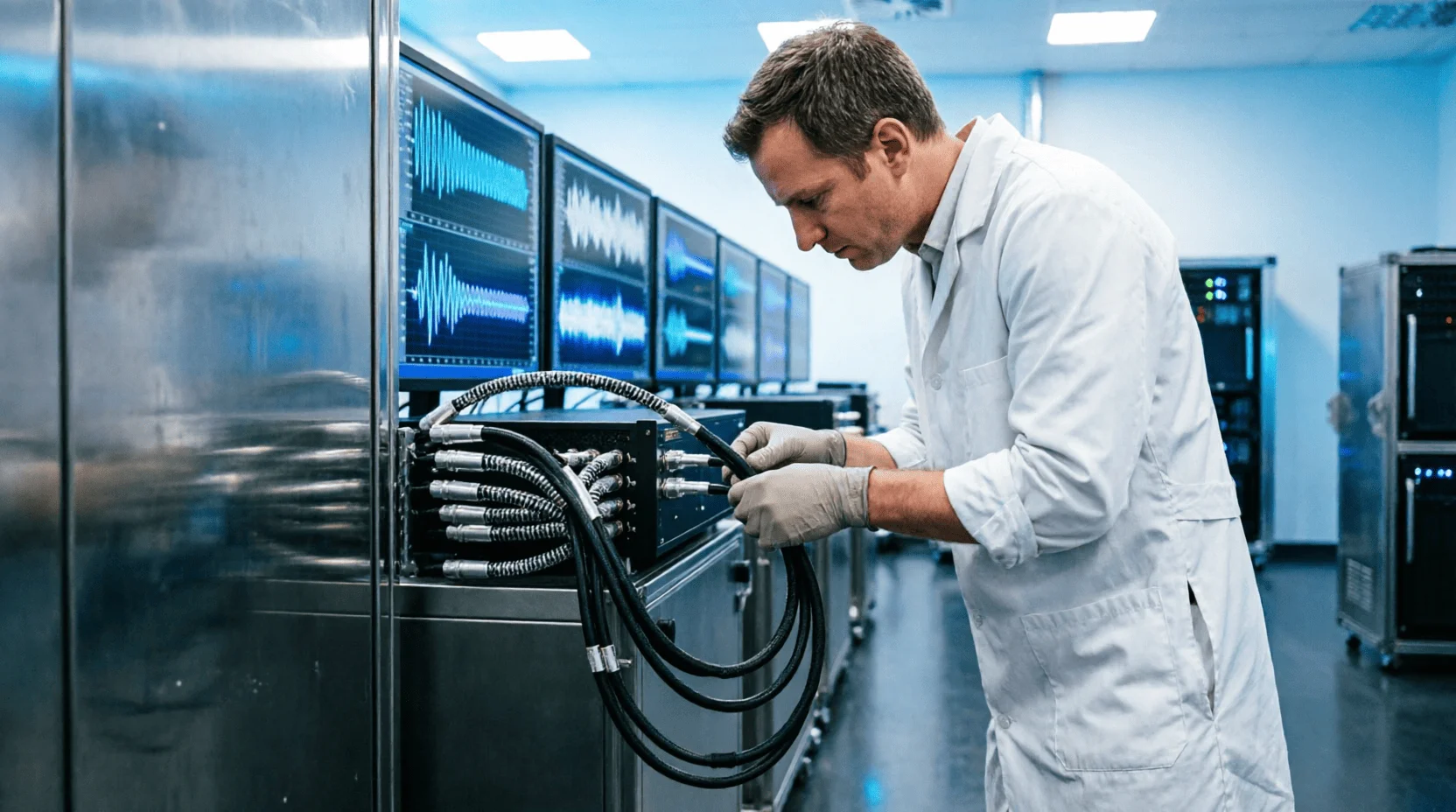
? The main victory is error correction.Qubits are fragile: heat, vibrations, and cosmic rays can disrupt calculations. In 2024–2026, laboratories demonstratedlogical qubits— groups of physical qubits that together behave as a single stable one; the error per logical qubit is reduced by tens of times.
? Road maps.IBM, Google, and Chinese teams are publishing plans for hundreds of logical qubits by the end of the decade; it's no longer "if," but "when and how much it will cost."
? First practical tasks.Simulation of small molecules for catalysts and batteries, portfolio and route optimization in pilot projects for banks and logistics companies—still on the verge of classic technology, but improving year after year.
5. Medicine and materials: where quantum will provide funding
? Medicines.Modeling a protein or candidate molecule on classical machines takes months of approximations; quantum simulation promises first-principles accuracy—reducing preclinical cycle times from years to months.
? Batteries and catalytic converters.Electrolyte and catalyst chemistry (including the Haber process for fertilizers, which consumes ~2% of the world's energy) are prime candidates for the first commercial quantum advantage.
? Materials.Room-temperature superconductors, light alloys, polymers with specified properties—all these are problems of quantum chemistry.
6. Logistics and finance: optimization of everything
? Logistics.The traveling salesman problem at the scale of global supply chains is a combinatorial explosion; quantum hybrid algorithms in pilots yield fuel and time savings that, at the scale of global carriers, amount to billions.
? Finance.Portfolio optimization and stress testing, taking into account thousands of scenarios; bank pilots for 2025–2026 demonstrate several-fold acceleration of certain calculations—not a revolution, but a sustainable trend.
7. Cryptography: Q-Day and Why It's Too Early to Panic
? Threat.Shor's algorithm theoretically breaks RSA and ECC, the basis of modern certificates and banking connections; but RSA-2048 requiresmillionsphysical qubits with error correction, and in 2026 the count is in the hundreds and thousands of noisy ones.
? Q-Day Ratings.Industry consensus is the 2030s and beyond; national standards institutes explicitly recommend preparation, but not panic.
? Post-quantum cryptography.NIST has approved the first post-quantum algorithms (lattices, codes); browsers, operating systems, and banks are already implementing "hybrid" encryption—classical + post-quantum. Your connections today are secure for years to come.
⚠️ The real threat is "collect now, decrypt later."An adversary can store intercepted encrypted traffic today and decrypt it after Q-Day; therefore, for long-lived secrets (government secrets, medical information), migration is critical—for personal passwords and correspondence, the horizons are incomparably softer.
8. Quantum Internet: Communication that cannot be intercepted
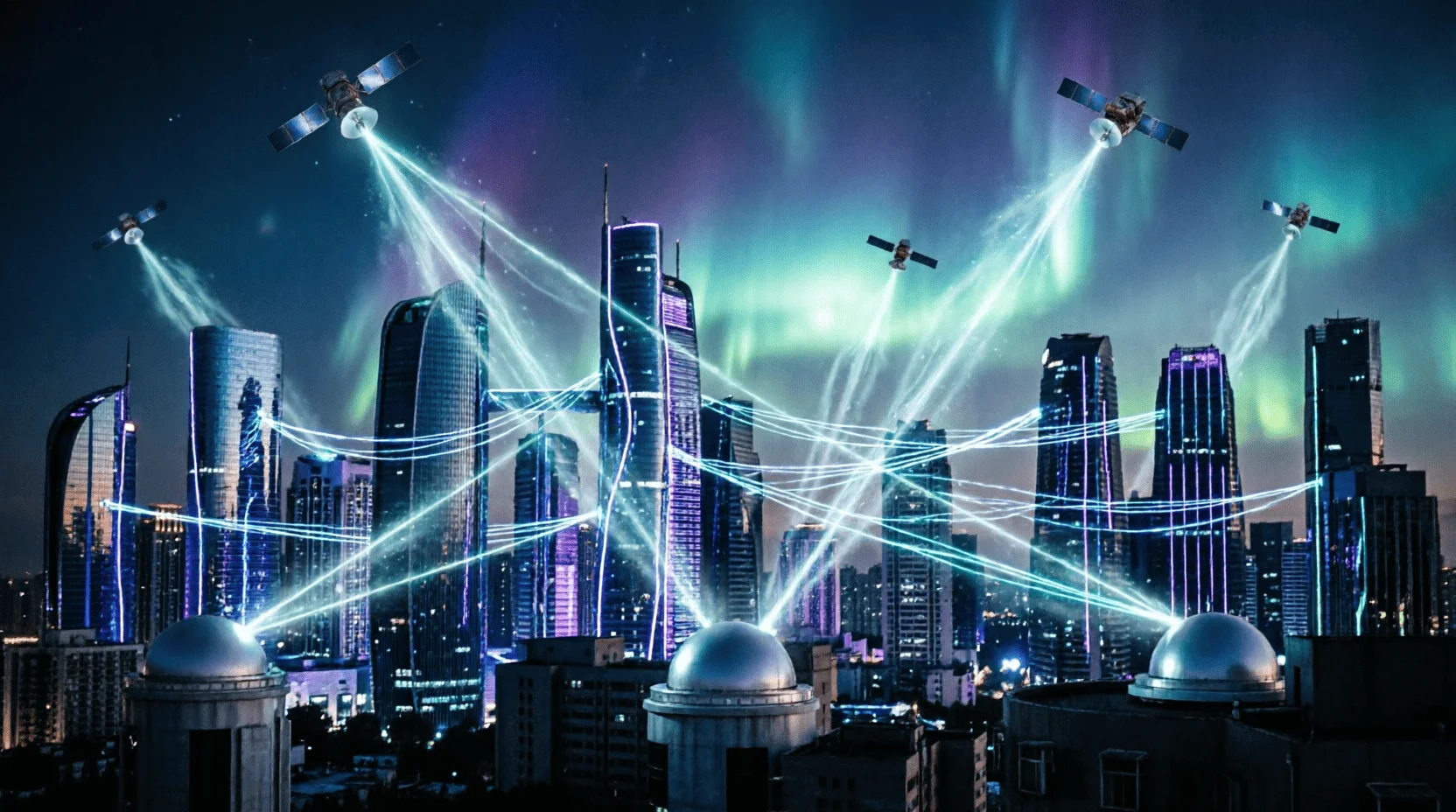
? Mo Tzu satellite.China transmitted entangled photons between stations over a distance of 1,200 km, setting a quantum communication record.
? QKD — quantum key distribution.Attempting to eavesdrop on a quantum channel irreversibly alters the state of photons—the interception is detected by physics, not mathematics; the first city lines are operating in China and Europe.
? This is not "the Internet instead of the regular one."Quantum channels transmit keys and connect quantum computers into clusters; your websites and videos will remain on the classical network. We wrote about space technologies in our article on AI and space – quantum communications have become another layer of space-based infrastructure.
9. Quantum Sensors: An Invisible Revolution
? Navigation without GPS.Quantum accelerometers and gravimeters allow submarines and autonomous vehicles to navigate without satellites; for civil aviation, they serve as a backup against interference.
? Medicine.Magnetoencephalography using quantum sensors is tens of times cheaper and more compact than classic SQUIDs; early diagnosis of neurological conditions is becoming more accessible.
? Geology.Quantum gravimetry reveals voids and minerals underground without drilling, making exploration cheaper and more accurate.
10. Who's in the Race: Money and the Geopolitics of Technology
????? Three poles.The US is an ecosystem of IBM, Google, startups, and venture capital; China is home to government programs and communications records; the EU is home to consortiums and a quantum flagship worth billions of euros.
? Private investment.Total investment in quantum startups has exceeded tens of billions of dollars; major cloud providers sell "quantum seconds" as a service—researchers can access them for hundreds of dollars per session.
? Talent drain and shortages.Quantum engineers are the most in-demand profession of the decade; salaries in laboratories and cloud platforms rival those of top IT.
11. Kazakhstan on the quantum agenda
? Education.Individual research groups at universities and research centers; mass entry through IBM Quantum Experience online platforms and university quantum physics courses.
? Infrastructure.Supercomputer and cloud resources provide a classic foundation for hybrid algorithms; there are no direct quantum machines in the country yet—and that's normal: they exist in a few laboratories around the world.
? Where is the entry point for a specialist?Mathematics and physics + programming; master's programs in quantum technologies in the region and online; participation in open quantum hackathons – a real path to the profession without moving "to Silicon Valley."
12. How Businesses Can Prepare: Quantum Migration Without Panic
? Four steps for companies
- Cryptography inventory:Where is RSA/ECC, what data lives longer than 10 years.
- Hybrid encryption:enable post-quantum algorithms where vendors have already provided support.
- Crypto-agility:architecture that allows changing algorithms without rewriting systems.
- Follow the roadmaps:Review your Q-Day assessments and your horizons once a year.
For personal user:You don't need to do anything—browsers and operating systems will migrate automatically; your passwords will be safe in 2026.
13. Myths about quantum computers
⚡ "It's faster than any supercomputer in everything."No: the advantage is for a special class of tasks; it does multiplication of numbers no faster than a calculator.
? "Banks will be hacked tomorrow."No: this requires millions of correct qubits; the industry is already changing cryptography in advance.
? "Quantum laptop in 5 years."No: a room-sized cryostat and sub-space temperatures won't fit in a laptop; the quantum will be a cloud.
"Quantum will replace AI."No: AI lives on GPU clusters; quantum computing will complement it in narrow simulation and optimization tasks—we discussed AI hardware separately.
14. Glossary: 10 Terms for Speaking the Language of the Era
? Short dictionary
- Qubit— quantum bit, an information carrier with a superposition of states.
- Superposition— simultaneous “mixed” state before measurement.
- Confusion— correlation of qubits, which makes the system integral.
- Decoherence- destruction of quantum states by the environment; the main enemy.
- Logical qubit— a "brick" of future machines protected by error correction.
- Shor's algorithm— quantum hacking of asymmetric cryptography.
- Q-Day— a hypothetical date for the practical implementation of this threat.
- Post-quantum cryptography— algorithms resistant to quantum attacks.
- QKD— quantum key distribution protected by physics.
- Quantum supremacy— a solution to a problem that was inaccessible to the classics within a reasonable time.
15. Links to other Lemag.kz articles
? Computer for AI— classical hardware on which modern AI lives, while quantum remains a laboratory.
? AI and space— a cosmic layer of technology, to which quantum communication has been added.
? Bank cards— cryptography protected by post-quantum migration.
? Neural networks for content— classical models that quantum can accelerate learning in specific niches.
Result:Quantum computers in 2026 aren't tomorrow's threat to your passwords or a smartphone replacement, but a slowly but irreversibly maturing scientific infrastructure: logical qubits, the first molecular simulations, quantum communications from satellites, and the quiet migration of cryptography. Those who understand technology without mysticism will win: engineers entering the profession, companies beginning crypto-migration, and every reader the calm knowledge that a coin in flight will one day become the money, medicines, and materials of the new century. ⚛️
❓ FAQ
When will a quantum computer crack my passwords?
Not anytime soon: cracking RSA-2048 requires millions of physical qubits with error correction; estimates put it at the 2030s and beyond. The industry is already transitioning to post-quantum algorithms approved by NIST, so data encrypted today is secure for years to come.
Will there be a quantum computer at home?
No, and there's no need: quantum machines require cryostats near absolute zero and solve a special class of problems; home PCs and clouds will remain classic, and quantum computing power will be available as a cloud service.
How much does a quantum computer cost?
Laboratory systems cost tens of millions of dollars; cloud access is charged per "quantum second"—from hundreds of dollars per session for research tasks.
What does artificial intelligence have to do with this?
Quantum computers won't replace AI, but they will speed up the training of individual models and the simulation of data for chemistry and materials; the core AI stack still resides on classic GPUs—we discussed this in our article on AI computing.
What is Q-Day?
The hypothetical day when a quantum machine will be able to crack modern asymmetric cryptography (RSA, ECC)—preparations for it—"quantum migration"—are already underway in banks and the public sector.
Are there quantum programs in Kazakhstan?
Individual research groups and educational initiatives at universities and research centers; mass training is provided through online courses on IBM Quantum, edX, and university master's programs in quantum physics.
Is quantum internet science fiction?
No: the first quantum communication lines are operating in China and Europe, the Mo Tzu satellite transmitted entangled photons over 1,200 km; these are key distribution channels, not "the Internet instead of the regular Internet."
📚 Read also
Эволюция искусственного интеллекта от диалоговых ботов к автономным исполнителям
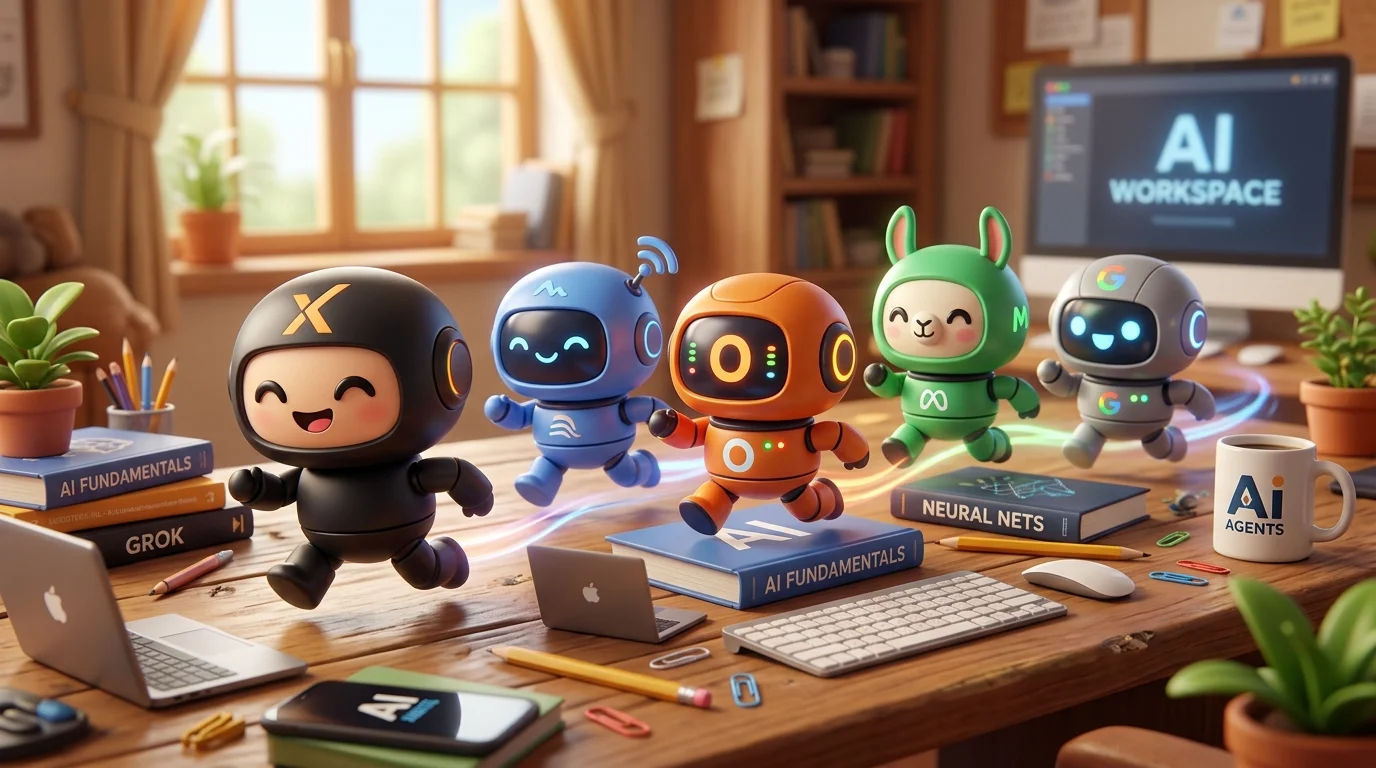
ИИ-агенты знаменуют эволюционный переход от традиционных чат-ботов к автономным цифровым исполнителям, способным самостоятельно планировать действия, управлять интерфейсами компьютеров и выполнять сложные многошаговые задачи в фоновом режиме без постоянного контроля человека. В отличие от простых систем формата «вопрос-ответ», ключевые решения от ведущих техногигантов — включая OpenAI (Operator/Dots), Anthropic (Claude Computer Use), xAI (Grok), Microsoft, Google и Salesforce — нацелены на достижение конкретного результата: от написания кода и работы в CRM до управления личными сервисами и приложениями. Развитие этой технологии кардинально меняет подход к автоматизации, смещая фокус с обычной генерации текста на решение реальных прикладных задач и оценку эффективности по конечному результату.
Развитие искусственного интеллекта: мультимодальность Astra и аналитическая мощь Claude Opus 5.5
Сравнительный анализ двух концептуальных векторов развития искусственного интеллекта — визуально-пространственного (Google Astra) и аналитико-агентного (Claude Opus 5.5). Современный ИИ развивает две разные компетенции: Astra становится «глазами и ушами» человека в физическом мире, а Claude Opus 5.5 взяла на себя роль автономного эксперта в цифровой среде и инженерии.
Такси без водителя: Waymo, Cybercab, Yandex и перспективы в Казахстане
Waymo (Google) ездит по США с 2020 года: десятки городов, 4 пассажира, лидар + камеры, уже выезжает на трассы. Цена примерно как у Uber. Tesla Cybercab только стартовал в сентябре 2026 в Остине: 2 места, без руля и педалей, только камеры. Обещают сильно дешевле — до $0,20–0,40 за милю. В Казахстане Yandex уже тестирует роботакси в Алматы. Пилот в трёх городах, коммерческий запуск — 2027. Будущее ближе, чем кажется. Кто быстрее сделает поездки дешевле и безопаснее?
💬 Comments (0)
No comments yet. Be the first!
Leave a comment
Comments are pre-moderated.